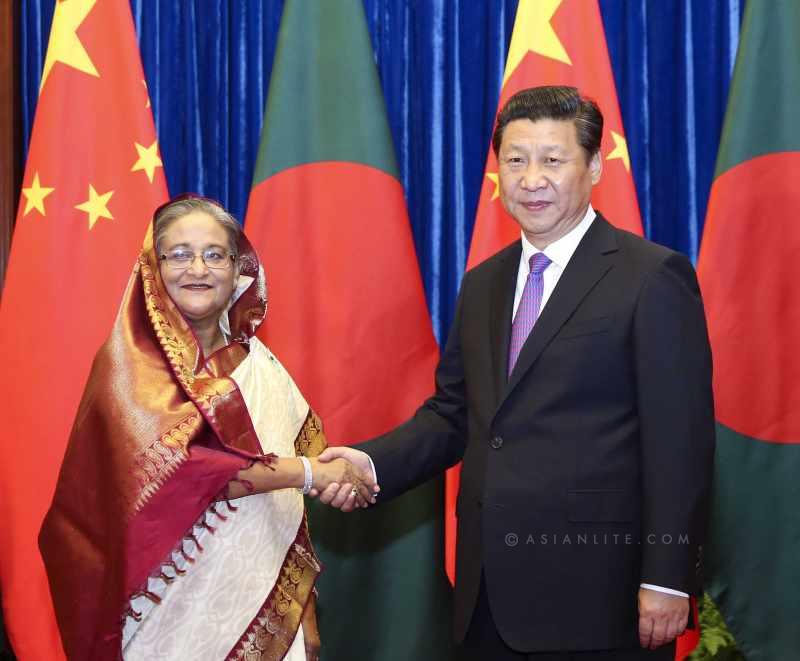
Between 2016 and 2022 alone, China invested over USD 26 billion in Bangladesh emerging as the top FDI provider to Bangladesh. …reports Asian Lite News
China has been increasing its engagement with Bangladesh, especially in the past decade, as it tries to make a success of its flagship programme – the Belt and Road Initiative (BRI).
In its hegemonic and expansionist design in Asia and beyond, the BRI is a key tool, and countries like Bangladesh are a pawn in its game for Great Power status.
China signed a memorandum of Understanding (MoU) with Bangladesh in 2016 with the promise of helping Bangladesh transform into a developed nation by 2041 through measures like poverty alleviation, energy independence, and sustained economic growth.
With Bangladesh in need of aid and funds, and Western donors such as the USA, the UK, and France not pitching in due to their concerns regarding human rights violations, backsliding of democratic processes, corruption, and weak institutions, China found an opportunity in this vacuum to ensnare Bangladesh in its BRI, and effectively in its debttrap playbook that China has employed in other countries including Sri Lanka, Pakistan, and several African countries.
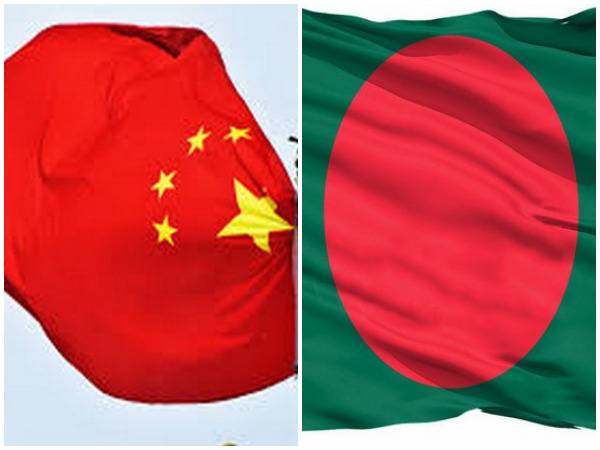
Today, there are over 240 Chinese companies dominating all the crucial sectors of Bangladesh’s economy including power, transport, digitisation, railroads, energy generation, and renewable energy.
Between 2016 and 2022 alone, China invested over USD 26 billion in Bangladesh emerging as the top FDI provider to Bangladesh. In 2023 alone thus far, China has already invested USD 800 million in Bangladesh in sectors including Plasma centre, garments, and manufacturing.
Concerns regarding China’s intentions have begun to emerge. In August 2022, Bangladeshi Finance Minister Mustafa Kamal cautioned the world to be wary of China’s debt trap through BRI investments. Bangladesh’s economy itself is inundated with Chinese investments.
For instance, China has built over 21 bridges and 11 highways, seven railway lines, and 27 energy and power generation projects. Chinese companies have also acquired three gas fields in Bangladesh responsible for generating over 50 per cent of Bangladesh’s total gas. Chinese stock exchanges (both Shanghai and Shenzhen) have acquired a 25 per cent stake in the Dhaka stock exchange.
China’s grasp on Bangladesh has tightened through its investments. Bangladesh needs to understand the Chinese playbook of debt-trap diplomacy. The cases of Sri Lanka, Pakistan, and several African countries signify the impending risk. The economic and financial condition of Sri Lanka is very precarious at the moment. The Sri Lankan economy is going through a high rate of inflation, a shortage of essential commodities including fuel and medicines, and a depleted foreign exchange reserve insufficient for import cover of even a few weeks.
The China factor in worsening Sri Lanka’s economic and financial condition cannot be overlooked. Between 2005 and 2015, China emerged as Sri Lanka’s leading source of FDI and development assistance.
China saw the opportunity in investing in multiple mega infrastructure projects in Sri Lanka in order to gain a strategic advantage in the Indian Ocean region and to counter India’s heft in the South Asia region. On the other hand, Sri Lanka readily sought Chinese assistance given the quick disbursement of loans as well as indifference to Sri Lanka’s human rights record and domestic issues.
Despite numerous warnings from experts about China’s salami-slicing strategy, which aims to ensnare nations in a debt trap while securing territorial rights, real-life cases illustrate its effectiveness. For instance, Sri Lanka found itself in a predicament where it had to lease its Hambantota port to China for 99 years. This was due to its inability to repay the substantial USD 1.4 billion debt owed to Beijing, which had financed the port’s construction. Deplorably, Sri Lanka not only accepted this arrangement but also encouraged China to invest in several projects that proved to be unsustainable.
China preyed on Sri Lanka’s economic vulnerabilities, loopholes, and corrupt practices for its political and economic calculations. When the debts became unserviceable on Sri Lanka’s part with its economic downfall, China shifted the blame to Sri Lanka for the depletion of its foreign exchange reserves and long-term economic mismanagement vis-a -vis unsustainable project proposals and borrowings.
Similarly, China is effectively colonising Pakistan through its debt-trap diplomacy.
The International Monetary Fund in its report in 2022 has raised a red flag with regard to China-Pakistan Economic Corridor (CPEC).
It stated that in 2022, contingent liabilities pose a significant risk to Pakistan’s debt sustainability with over 30 per cent of Pakistan’s total foreign debt being owed to China.
Pakistan’s latest Economic Survey 2021-22 gives a glimpse of how much indebted Pakistan is to China. China is Pakistan’s largest bilateral creditor with loans of over USD 14.5 billion. However, this does not cover the true extent of Chinese lending to Pakistan. For instance, lending has been made under various other categories such as China’s State Administration and Foreign Exchange (SAFE) which has lent over USD 7 billion to Pakistan.
Moreover, a significant part of Chinese lending is for CPEC which underlines the strategic intent behind lending. Such a project is central to China’s vision of building a Sino-centric world by creating infrastructural projects and pulling these countries into its political orbit. All of this works well for China’s ploy of salami-slicing Pakistani territory.
China’s BRI finds the best host in Africa with all the African countries barring a few being enmeshed in China’s flagship project.
Notably, in a number of African countries China is involved not only in large-scale infrastructure, industrial, and connectivity projects, but additionally in peace and security projects as well. It lures the African countries into its BRI ambit by presenting an attractive template that promises a high rate of return alongside no pre-conditions with the type of political regime or their nature of governance. It also does not care about elite capture or rent-seeking in these countries.
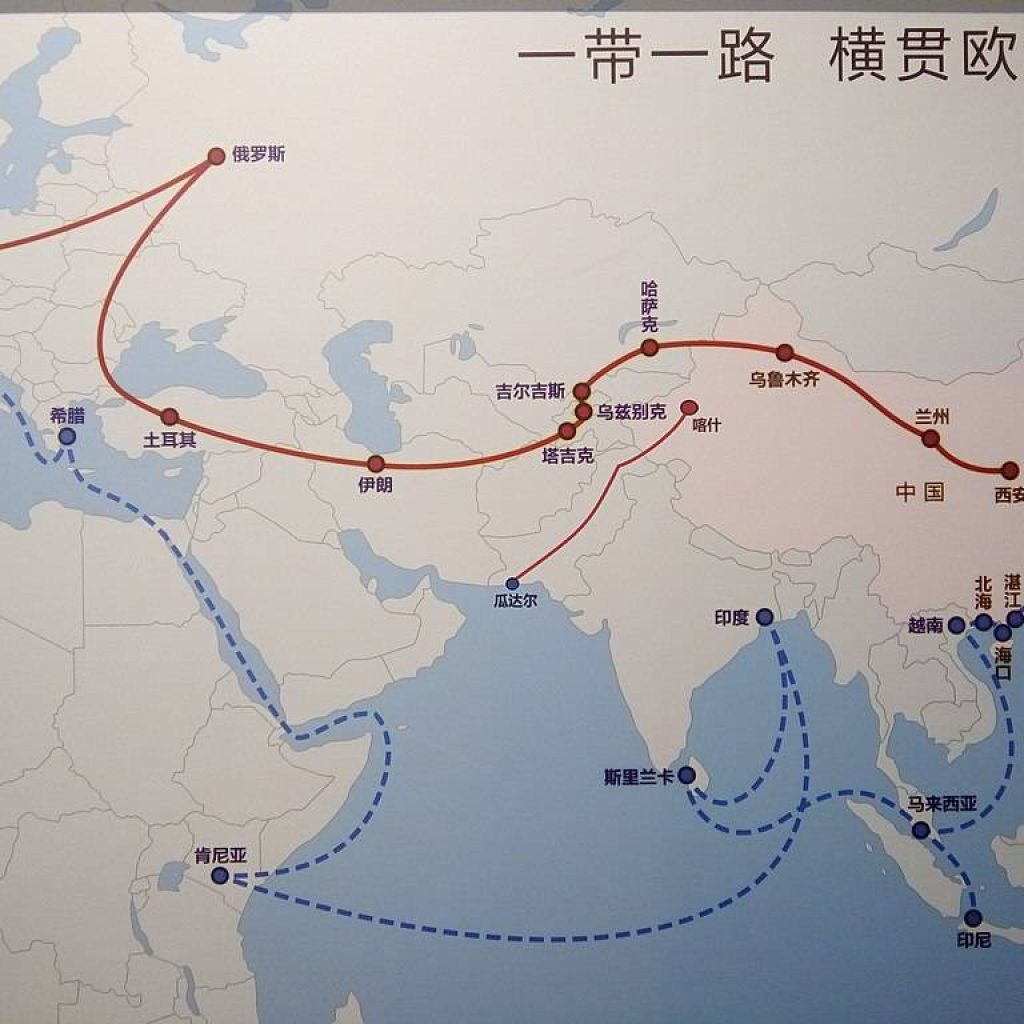
China’s focus remains on expanding the purview of its own influence in the emerging Great Game in the turbulent geopolitical global order.
China is well-known for its ‘flag-following-trade’ policy in Southeast Asia and the broader Indo-Pacific region. Its Belt and Road Initiative (BRI) holds significant sway in Bangladesh, raising concerns about debt-trap diplomacy and territorial encroachments.
China’s strategic investments in key sectors, similar to its approach in Sri Lanka and Pakistan, emphasize the need for vigilance.
The growing reliance on Chinese funding, evident in Bangladesh’s economic entanglement, requires a prudent understanding of China’s strategies.
Sri Lanka’s predicament serves as an example of how economic vulnerabilities can lead to long-term repercussions, and Pakistan’s involvement in the China-Pakistan Economic Corridor (CPEC) is another cautionary tale.
China’s expansionist behaviour, coupled with Africa’s integration into the BRI, underlines the urgency for nations to protect their sovereignty from China’s calculated manoeuvres within a rapidly shifting global order
Hence, Bangladesh must wisely avoid becoming a pawn in China’s grand geopolitical strategy to safeguard its sovereignty and interests.