April 25, 2025
3 mins read

Vance concludes cultural, strategic India tour 

The Vice President also announced the formal finalisation of the Terms of Reference for a future India-US trade agreement, aimed at more than doubling bilateral trade to $500 billion by the end of the decade 

Vice President JD Vance, accompanied by Second Lady Usha Vance and their children Ewan, Vivek, and Mirabel, departed from Jaipur International Airport on Thursday, wrapping up a four-day official visit to India that combined cultural appreciation with high-level diplomatic engagements. 

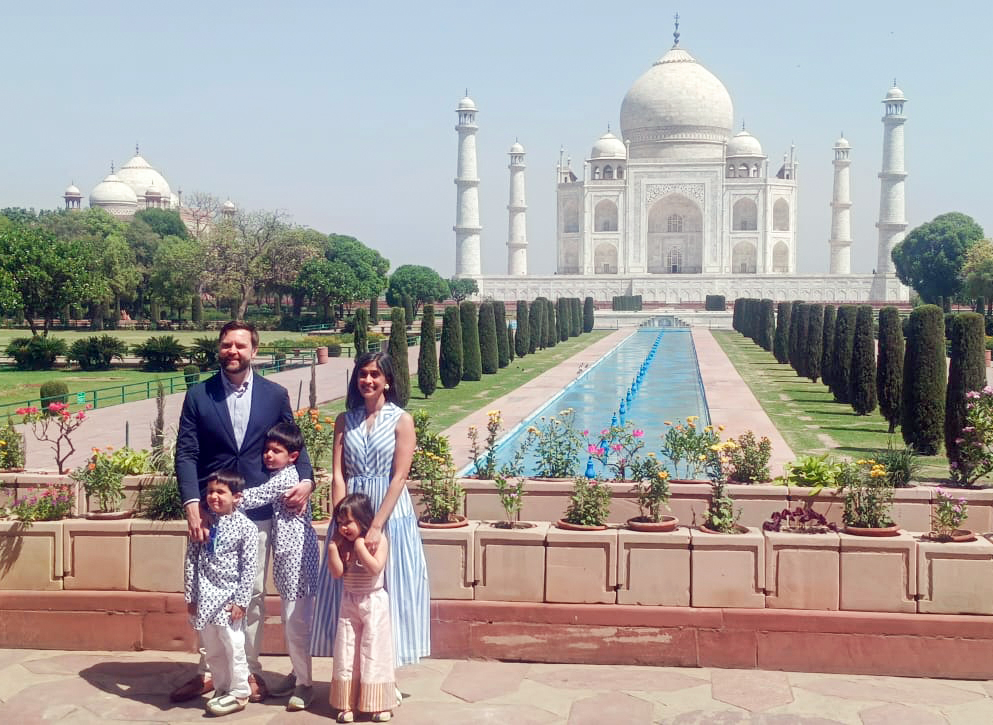
The departure from Jaipur marked the final chapter in a journey that saw the Vance family explore key heritage sites and engage with Indian leaders across multiple cities. A day earlier, they visited the iconic Taj Mahal in Agra. Sharing his experience on social media platform X, Vice President Vance posted, “Today I visited the Taj Mahal with Usha and the kids. It’s a beautiful historic site, and I’m grateful for the warm welcome we received there.” 

The Vance family was welcomed at Agra’s Technical Airport by Uttar Pradesh Chief Minister Yogi Adityanath. To honor the visit, Agra was festooned with vibrant rangolis, sand art, floral installations, and flags from both nations. Hoardings and welcome banners reflected the cultural warmth and growing diplomatic closeness between India and the United States. 

For security, the 12-kilometre route from the airport to the Taj Mahal via Shilpgram was secured under a comprehensive protection plan. US security personnel, who arrived three days earlier, coordinated with Indian counterparts to declare the route a zero-traffic zone during the Vice President’s movement. 

The Taj Mahal visit was part of a wider itinerary that included stops at New Delhi’s Swaminarayan Akshardham Temple, Jaipur’s Amber Fort, and the Central Cottage Industries Emporium – showcasing a harmonious blend of cultural diplomacy and family exploration. 

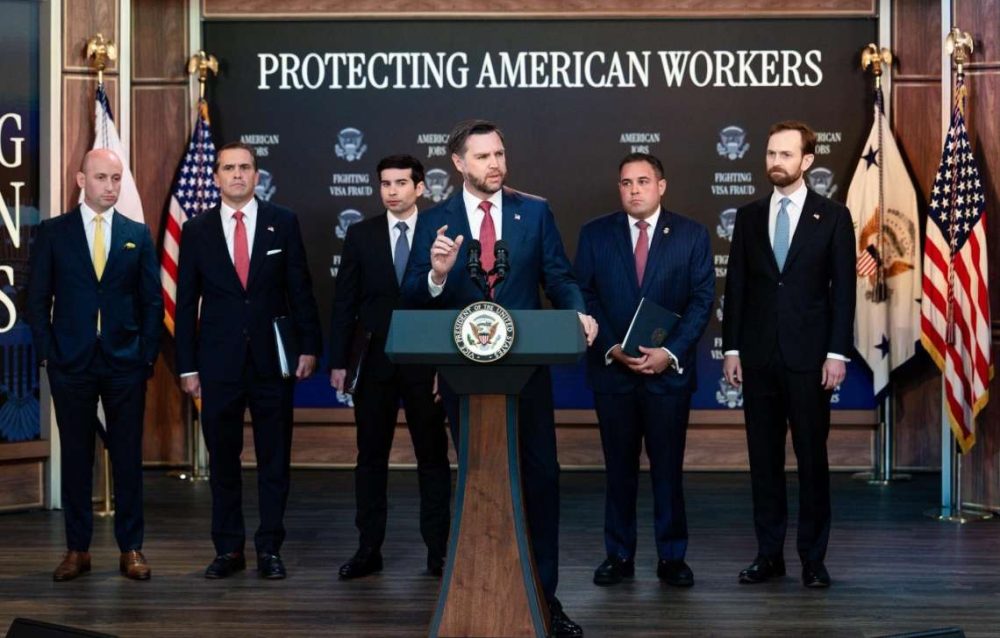
On Tuesday, in Jaipur, Vance defended President Donald Trump’s trade policy, saying, “Critics have attacked my president, President Trump, for starting a trade war in an effort to bring back the jobs of the past, but nothing could be further from the truth.” He emphasised the administration’s goal to reshape global trade alongside India, “so that America, with friends like India, can build a future worth having for all of our people together.” 

Vance also announced the formal finalisation of the Terms of Reference for a future India-US trade agreement, aimed at more than doubling bilateral trade to $500 billion by the end of the decade. 

“When President Trump and Prime Minister Modi announced in February that our countries aim to more than double our bilateral trade… I know that both of them meant it,” he said. The proposed agreement will focus on job creation, resilient supply chains, and economic prosperity. 

On Monday, Prime Minister Narendra Modi hosted Vice President Vance and his family at his Lok Kalyan Marg residence in New Delhi. 

Vance praised India’s role as the upcoming host of the QUAD summit, describing it as “fitting,” and noted that the US conducts more joint military exercises with India than with any other country. 

Vance on Tuesday also condemned the killing of tourists in Jammu and Kashmir’s Pahalgam in a terror attack. In a post on X, Vance expressed solidarity with the victims and their families. 

“Usha and I extend our condolences to the victims of the devastating terrorist attack in Pahalgam, India. Over the past few days, we have been overcome with the beauty of this country and its people. Our thoughts and prayers are with them as they mourn this horrific attack,” the US Vice President said. 

US President Donald Trump also condemned the incident and said that America stands with India against terrorism. 

“Deeply disturbing news out of Kashmir. The United States stands strong with India against Terrorism. We pray for the souls of those lost, and for the recovery of the injured. Prime Minister Modi, and the incredible people of India, have our full support and deepest sympathies. Our hearts are with you all!,” Trump said.   
Previous Story

Trump unhappy with deadly strikes on Kyiv 

Next Story

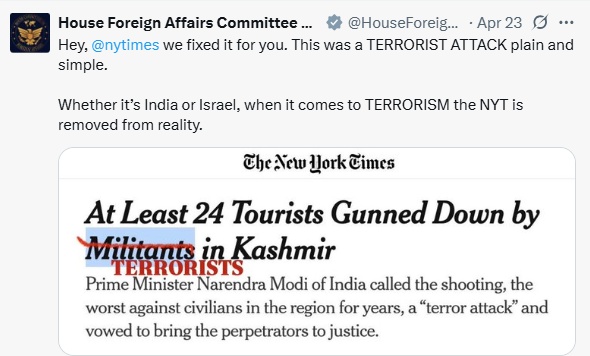
Call It What It Is’: US Committee Rebukes NYT Over Kashmir Coverage

Previous Story

Trump unhappy with deadly strikes on Kyiv 

Next Story

Call It What It Is’: US Committee Rebukes NYT Over Kashmir Coverage

Latest from -Top News

Pakistan Risks Overstretching Itself in Yemen War

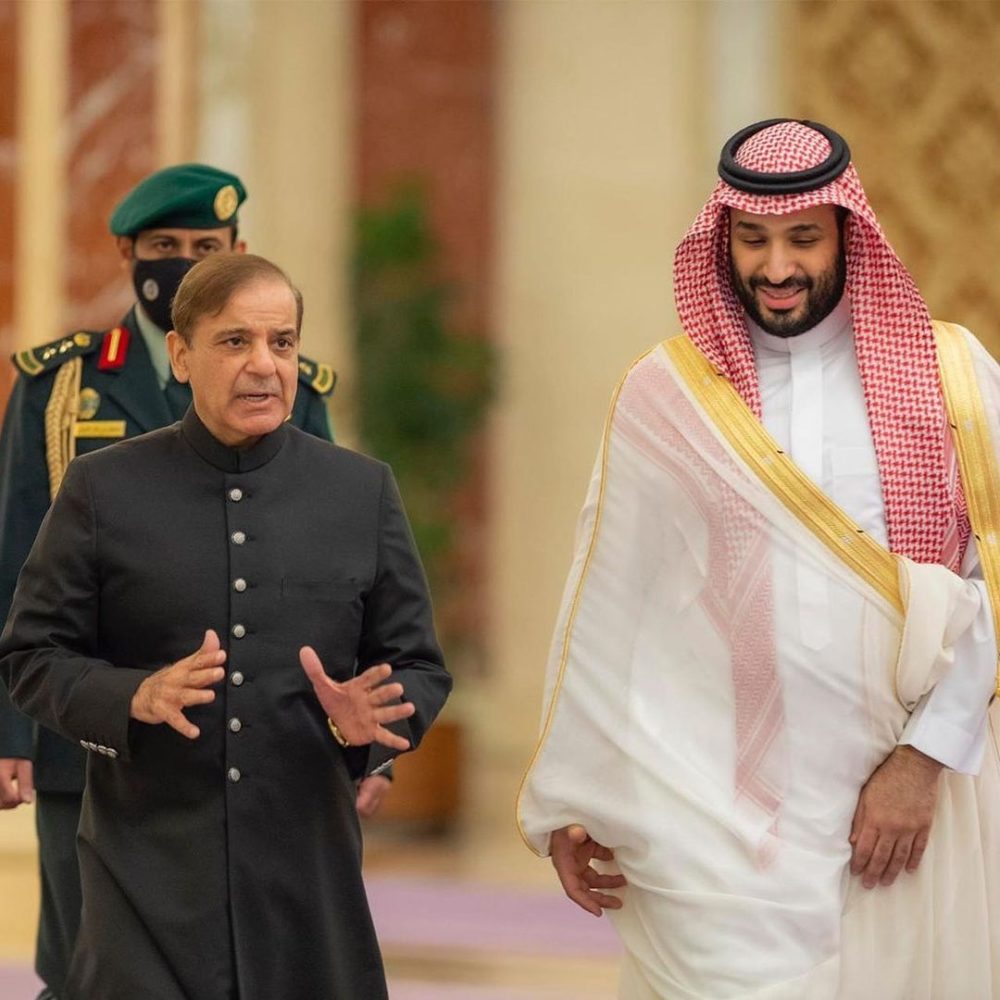
Pakistan’s expanding military role in Saudi Arabia amid the Yemen conflict could strain its defence resources and fragile finances…reports Asian Lite News Desk Pakistan’s military involvement in the war in Yemen may prove unsustainable because of mounting financial pressures and competing security demands, according to a new report. Islamabad’s growing military presence in Saudi Arabia risks stretching its defence resources while exposing the country to greater strategic and economic challenges. An article by Andrew Wilson in One World Outlook describes Pakistan’s involvement as a case of “fiscal and strategic overreach”, arguing that the country lacks the financial flexibility to sustain an expanded military commitment. Pakistan’s external finances depend heavily on an International Monetary Fund (IMF) programme, financial support from Gulf countries and remittances from Pakistani workers in the region. The report argues that deeper military involvement in the conflict could place additional pressure on these sources of financial stability. It also warns that deploying troops and military equipment abroad could weaken Pakistan’s capacity to address security challenges along its eastern border and deal with two domestic insurgencies. The move could also draw Islamabad into a conflict it has sought to approach cautiously. A Reuters report in May, citing Pakistani security and government sources, said Islamabad had deployed around 8,000 troops, a squadron of approximately 16 aircraft, mostly JF-17 fighter jets, two drone squadrons and a Chinese HQ-9 air-defence battery to Saudi Arabia. According to those sources, Riyadh was financing the deployment, with Pakistani personnel operating the equipment. The sources also said a confidential agreement contemplated the possibility of deploying up to 80,000 troops. Islamabad has not confirmed those figures, although it has acknowledged its military presence in Saudi Arabia, including the deployment of fighter jets at King Abdulaziz Air Base from April. The One World Outlook article argues that Saudi financial support can cover allowances and operating expenses but cannot easily replace military equipment needed elsewhere or resolve the political and strategic challenges of participating in the Yemen conflict. Pakistan’s defence budget is another concern. For the 2026-27 financial year, the federal government allocated PKR 3 trillion, or approximately $10.8 billion, to defence services. The allocation represents an 18 per cent increase from the original PKR 2.55 trillion provision and amounts to around 2.1 per cent of projected gross domestic product (GDP). Defence spending accounts for approximately 16 per cent of the federal government’s PKR 18.8 trillion expenditure. Military pensions are budgeted separately at PKR 822 billion, while debt servicing costs stand at approximately PKR 8 trillion, more than two-and-a-half times the defence allocation. The report argues that these competing financial obligations leave little room for additional military expenditure without placing further pressure on public finances. Pakistan’s reliance on IMF assistance also limits its fiscal flexibility. The country must meet the conditions attached to the programme, including a primary budget surplus target of 2 per cent of GDP and continued restraint on development spending. According to the article, these requirements make it difficult for Islamabad to finance an additional military commitment without compromising other budgetary priorities. Pakistan’s economic indicators offer limited reassurance. Economic growth for the 2025-26 financial year is estimated at between 3.6 and 3.7 per cent, while inflation reached approximately 10.3 per cent in September following an energy price shock. Foreign exchange reserves stood at around $21.5 billion at the end of September. Although this marks an improvement from the low levels recorded in 2023, the report notes that the reserves cover only a few months of imports. Financial assistance from Gulf partners remains central to Pakistan’s external stability. The article says Islamabad holds approximately $8 billion in Saudi deposits at its central bank. In July, the State Bank of Pakistan said Riyadh had extended the maturity of $5 billion in deposits to December 2028, easing the country’s immediate external financing requirements. A further $3 billion deposit was also extended in the spring. However, the article argues that these arrangements provide temporary relief rather than long-term financial independence, particularly as regional conflict threatens the stability of the Gulf economies on which Pakistan relies. The report concludes that Pakistan faces a difficult balance between supporting Saudi Arabia militarily and preserving the financial and military resources needed to address its domestic and regional challenges.

UK and Germany Ratify Kensington Treaty

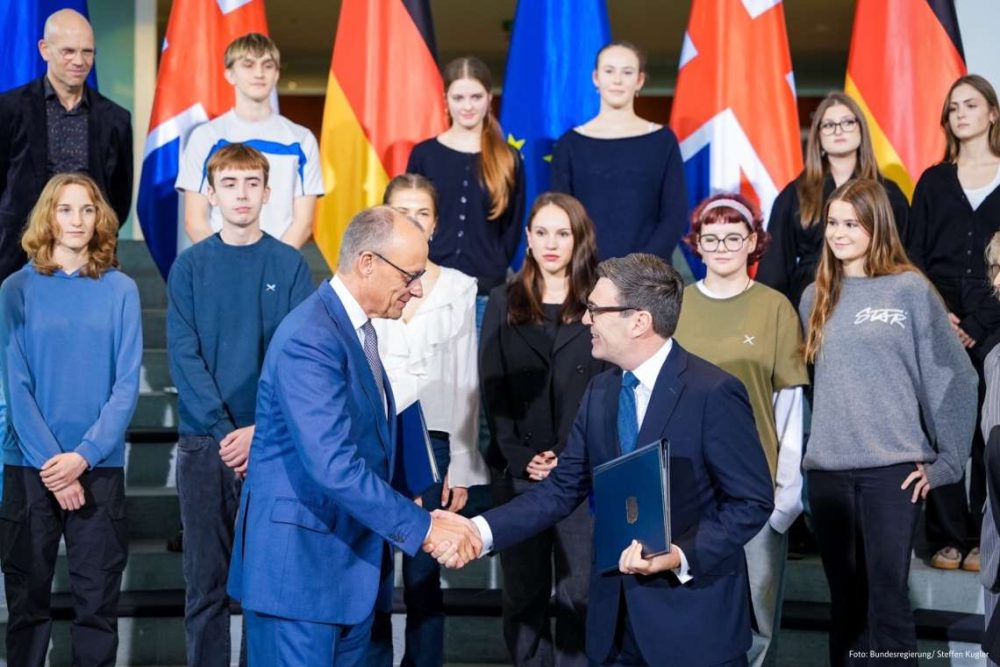
Britain and Germany ratify the Kensington Treaty, agreeing new cooperation on AI, quantum research, defence and security while targeting investment, jobs and Russian hybrid threats…reports Asian Lite News Desk Britain and Germany

Economic tide is turning in Bangladesh

If there is one thing that can bring some comfort to the struggling Bangladeshi economy, it is good relations with India. Bangladesh should remember that Delhi’s backing, through easy supplies of essentials
Go toTop

Don't Miss

India’s EAM to Strengthen Gulf Relations with Qatar, Bahrain Visits

During the second leg of his visit, EAM Jaishankar will

Indian-American Vivek Ramaswamy announces 2024 Presidential bid

Ramaswamy filed a statement of candidacy with the Federal Election