November 13, 2025
3 mins read

Cops Swoop After Delhi Car Blast

Intelligence agencies revealed that the suspects had allegedly planned to prepare around 32 old vehicles with explosives to carry out coordinated attacks across multiple locations…reports Asian Lite News

The Delhi Police on Wednesday picked up almost a dozen suspects related directly or indirectly to the arrests made in the Delhi Car blast that occurred on Monday.

According to the Delhi police sources, this is the first set of suspects rounded up by the Delhi Police after the blast near the Red Fort, and multiple agencies are questioning all suspects.

Earlier, in the Delhi car blast incident, a link of a “white-collar terror network” surfaced in the preliminary investigation, with the probe agencies finding links of the terror incident with Pakistan-based outfits Jaish-e-Mohammad (JeM) and Ansar Ghazwat-ul-Hind (AGH).

The network, which allegedly involved doctors and clerics, was dismantled following a series of coordinated operations between October 19 and November 10, 2025, resulting in the recovery of 2,921 kilograms of explosives and many arrests.

The investigation, now being handled by the National Investigation Agency (NIA), began after a joint operation by the Jammu and Kashmir Police and Haryana Police exposed an elaborate inter-state nexus spanning educational, medical, and religious institutions.

On October 27, security forces apprehended Maulvi Irfan Ahmed Wage from Shopian and Zameer Ahmed from Wakura, Ganderbal, recovering a pistol and ammunition from their possession.

The probe soon expanded beyond Jammu and Kashmir. On October 30, Dr Muzamil, a faculty member at Al-Falah Medical College in Faridabad, was arrested, followed by the November 5 arrest of Dr Adeel from Saharanpur, Uttar Pradesh.

Subsequent searches at Anantnag Hospital on November 7 led to the seizure of an AK-56 rifle and other ammunition, while a day later, a raid at Al-Falah Medical College yielded additional rifles, pistols, and gunpowder.

The following days saw the arrest of a suspect named Madarsi from his residence in Dhauj, Faridabad, and a massive recovery of 2,563 kg of explosives from the home of Hafeez Mohammad Ishtiaq, an imam at the Al-Falah Mosque in Mewat.

Intelligence agencies revealed a larger terror conspiracy linked to the deadly car blast near Delhi’s Red Fort that claimed 12 lives, with sources saying that the suspects had allegedly planned to prepare around 32 old vehicles with explosives to carry out coordinated attacks across multiple locations.

According to intelligence agency sources, the ongoing investigation has expanded after it was found that the accused had already begun work on modifying an i20 and an EcoSport vehicle for potential use in the attacks. Investigators are now examining whether other similar vehicles were being readied as part of a broader plan to execute serial blasts.

“After the i20 and EcoSport, it came to light that preparations were underway to ready 32 more old vehicles which could be fitted with explosives,” an intelligence source said.

Further, Investigation agencies informed that around eight suspects were allegedly preparing to execute coordinated explosions at four locations, with each pair assigned to a specific target city. Preliminary investigation indicates that the accused groups had intended to move in pairs, each carrying multiple improvised explosive devices (IEDs) for simultaneous attacks. Among those under scrutiny are individuals linked to past terror cases, including Red Fort blast accused Dr Muzammil, Dr Adeel, Dr Umar, and Shaheen.

According to sources, the police were able to foil a major terror conspiracy involving a plan to carry out a series of blasts across multiple Indian cities. Sources revealed that the accused had jointly raised approximately Rs 20 lakh in cash, which was handed over to Umar for operational expenses. The funds were allegedly used to procure over 20 quintals of NPK fertiliser ( NPK fertiliser is a blend of three Nitrogen (N), Phosphorus (P), and Potassium (K) and can be used to extract explosive material ) worth around Rs 3 lakh from Gurugram, Nuh, and adjoining areas, intended for the preparation of IEDs.Investigators have also uncovered that Umar created a Signal app group comprising two to four members to coordinate activities securely.

According to probe agencies, Dr Muzammil became inclined towards Ansar Gazwat-Ul-Hind, an offshoot of ISIS, between 2021 and 2022 after maintaining contact with associates of slain terrorists. He was introduced to the network by one Irfan, alias Maulvi. Weapons recovered in 2023 and 2024 are believed to have been acquired by this module as part of their preparation for forming an independent terror group.
Previous Story

Nicole Kidman: I’ve experienced, survived a lot

Next Story

Modi concludes Bhutan visit after cementing ties

Previous Story

Nicole Kidman: I’ve experienced, survived a lot

Next Story

Modi concludes Bhutan visit after cementing ties

Latest from -Top News

Pakistan Risks Overstretching Itself in Yemen War

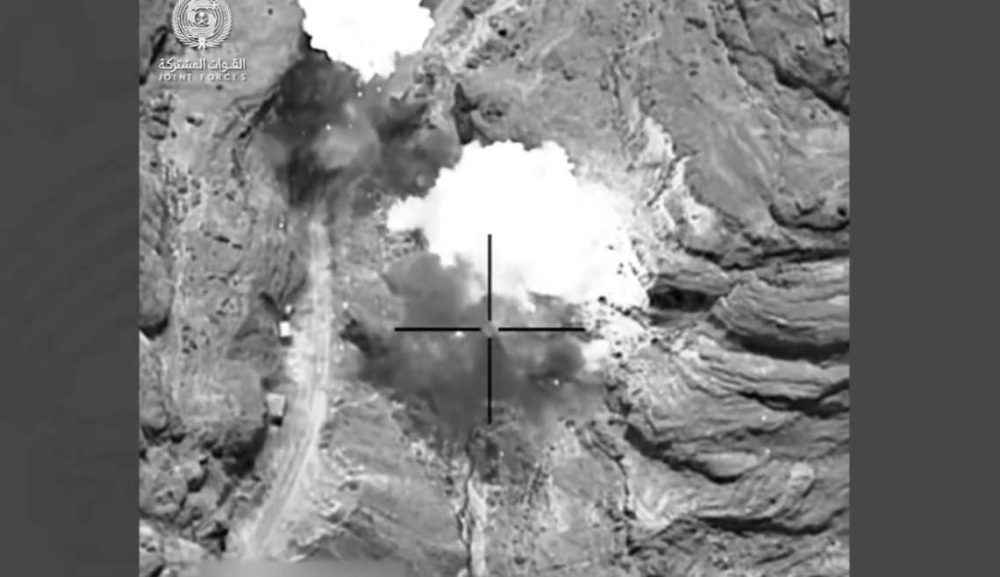
Pakistan’s expanding military role in Saudi Arabia amid the Yemen conflict could strain its defence resources and fragile finances…reports Asian Lite News Desk Pakistan’s military involvement in the war in Yemen may prove unsustainable because of mounting financial pressures and competing security demands, according to a new report. Islamabad’s growing military presence in Saudi Arabia risks stretching its defence resources while exposing the country to greater strategic and economic challenges. An article by Andrew Wilson in One World Outlook describes Pakistan’s involvement as a case of “fiscal and strategic overreach”, arguing that the country lacks the financial flexibility to sustain an expanded military commitment. Pakistan’s external finances depend heavily on an International Monetary Fund (IMF) programme, financial support from Gulf countries and remittances from Pakistani workers in the region. The report argues that deeper military involvement in the conflict could place additional pressure on these sources of financial stability. It also warns that deploying troops and military equipment abroad could weaken Pakistan’s capacity to address security challenges along its eastern border and deal with two domestic insurgencies. The move could also draw Islamabad into a conflict it has sought to approach cautiously. A Reuters report in May, citing Pakistani security and government sources, said Islamabad had deployed around 8,000 troops, a squadron of approximately 16 aircraft, mostly JF-17 fighter jets, two drone squadrons and a Chinese HQ-9 air-defence battery to Saudi Arabia. According to those sources, Riyadh was financing the deployment, with Pakistani personnel operating the equipment. The sources also said a confidential agreement contemplated the possibility of deploying up to 80,000 troops. Islamabad has not confirmed those figures, although it has acknowledged its military presence in Saudi Arabia, including the deployment of fighter jets at King Abdulaziz Air Base from April. The One World Outlook article argues that Saudi financial support can cover allowances and operating expenses but cannot easily replace military equipment needed elsewhere or resolve the political and strategic challenges of participating in the Yemen conflict. Pakistan’s defence budget is another concern. For the 2026-27 financial year, the federal government allocated PKR 3 trillion, or approximately $10.8 billion, to defence services. The allocation represents an 18 per cent increase from the original PKR 2.55 trillion provision and amounts to around 2.1 per cent of projected gross domestic product (GDP). Defence spending accounts for approximately 16 per cent of the federal government’s PKR 18.8 trillion expenditure. Military pensions are budgeted separately at PKR 822 billion, while debt servicing costs stand at approximately PKR 8 trillion, more than two-and-a-half times the defence allocation. The report argues that these competing financial obligations leave little room for additional military expenditure without placing further pressure on public finances. Pakistan’s reliance on IMF assistance also limits its fiscal flexibility. The country must meet the conditions attached to the programme, including a primary budget surplus target of 2 per cent of GDP and continued restraint on development spending. According to the article, these requirements make it difficult for Islamabad to finance an additional military commitment without compromising other budgetary priorities. Pakistan’s economic indicators offer limited reassurance. Economic growth for the 2025-26 financial year is estimated at between 3.6 and 3.7 per cent, while inflation reached approximately 10.3 per cent in September following an energy price shock. Foreign exchange reserves stood at around $21.5 billion at the end of September. Although this marks an improvement from the low levels recorded in 2023, the report notes that the reserves cover only a few months of imports. Financial assistance from Gulf partners remains central to Pakistan’s external stability. The article says Islamabad holds approximately $8 billion in Saudi deposits at its central bank. In July, the State Bank of Pakistan said Riyadh had extended the maturity of $5 billion in deposits to December 2028, easing the country’s immediate external financing requirements. A further $3 billion deposit was also extended in the spring. However, the article argues that these arrangements provide temporary relief rather than long-term financial independence, particularly as regional conflict threatens the stability of the Gulf economies on which Pakistan relies. The report concludes that Pakistan faces a difficult balance between supporting Saudi Arabia militarily and preserving the financial and military resources needed to address its domestic and regional challenges.
Go toTop

Don't Miss

Indian envoy reviews Kaladan Project ops in Myanmar 

The visit included a comprehensive review of Sittwe Port, which

World rebalancing from ‘Euro Atlantic’ view, says Jaishankar

The foreign minister pointed out that as the world transformed