Pakistan’s child‑protection crisis is too vast, too entrenched, and too politically sensitive to be solved by legal reform alone. Real change requires confronting the social norms that normalise child marriage, strengthening institutions that protect children, and ensuring that religious leaders cannot use minors as political bargaining chips, writes Dr Sakariya Kareem
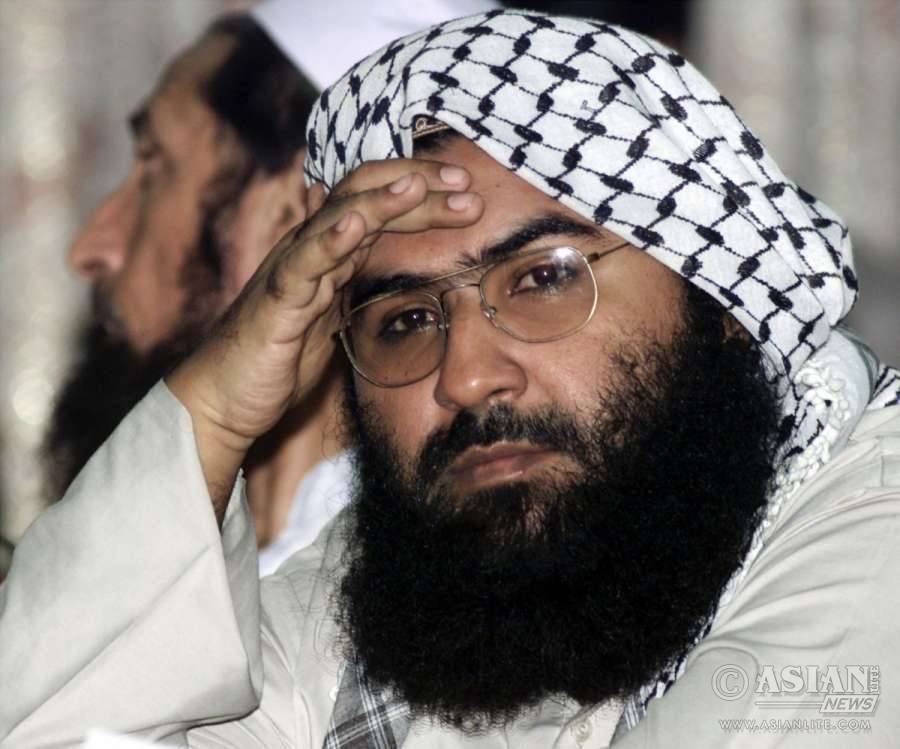
Even after Pakistan finally enacted the Child Marriage Restraint Bill 2025, a chorus of hardline clerics and political leaders is working relentlessly to undermine it denouncing the law as “un‑Islamic,” insisting that puberty should determine a girl’s readiness for marriage, and warning that family authority must trump state protection. The recent statements by JUI‑F chief Maulana Fazlur Rehman and party leader Hafiz Hamdullah have reignited a national debate that Pakistan’s lawmakers believed had been resolved.
Their open defiance of the child marriage restraint law that unambiguously bans marriage under the age of 18 has raised legitimate questions about whether Islamabad’s legislative reforms represent real, enforceable change, or whether they remain symbolic gestures overshadowed by entrenched political and religious resistance.
Maulana Fazlur Rehman, speaking in Parliament on January 24, declared his intention to facilitate marriages of children as young as ten, eleven, and twelve. His remarks were not off‑the‑cuff provocations; they were a deliberate challenge to the state’s authority and to the legal protections designed to safeguard children’s health, education, and well‑being. Hafiz Hamdullah subsequently threatened that he would marry a 16‑year‑old girl “if he became angry.” These statements were not merely inflammatory; they exposed a troubling willingness among influential religious leaders to use minors as political leverage.
Their defiance is particularly striking given that the Federal Shariat Court ruled in 2021 that setting a minimum marriage age does not contradict Islamic principles. Yet, despite this judicial clarity, religious parties have revived arguments that the law is “against Sharia,” insisting that puberty not age should determine marital eligibility. Leaders from Jamaat‑e‑Islami and JUI‑F have accused the government of violating constitutional and religious boundaries, framing the legislation as an attack on Pakistan’s Islamic identity. The Council of Islamic Ideology’s condemnation of the bill has further emboldened these groups, who now plan nationwide protests.
This resistance reveals a deeper structural problem: legal reforms in Pakistan often collide with powerful religious and political networks that can obstruct implementation. The passage of the 2025 bill may signal progress in Islamabad, but the backlash demonstrates how fragile that progress is outside the capital. In a country where more than 40 percent of the population is under 18 roughly 112 million children the stakes could not be higher. When influential leaders publicly undermine child‑protection laws, they weaken the state’s ability to enforce them and reinforce harmful social norms that already endanger millions of girls.

Child marriage in Pakistan is not a marginal issue. It is widespread, particularly in rural areas where poverty, limited education, and patriarchal customs intersect. According to the World Health Organization, 21 percent of Pakistani girls were married before the age of 18 as of 2019. These marriages often result in early pregnancies, malnutrition, school dropout, and lifelong health complications. The law aims to address these harms, but legislation alone cannot dismantle the social, economic, and religious structures that sustain the practice.
The problem becomes even more alarming when viewed alongside Pakistan’s broader crisis of child sexual exploitation, particularly the abduction and forced conversion of girls from religious minorities. Experts estimate that around 1,000 Christian and Hindu girls are abducted and forcibly married each year. Across Pakistan, the pattern is tragically familiar.
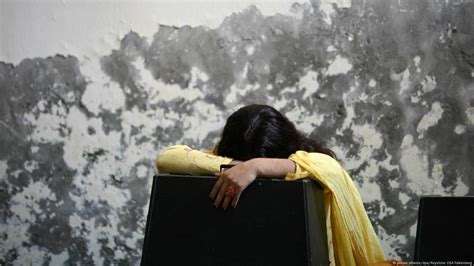
Young Christian and Hindu girls are abducted, forcibly converted to Islam, and married off long before they reach adulthood. Cases like 13‑year‑old Arzoo Raja, a Christian girl taken and married after a coerced conversion, or 14‑year‑old Huma Younus, also Christian, who was kidnapped and declared “married” despite being a minor, illustrate how deeply rooted the problem is. Myra Shehbaz, another 14‑year‑old Christian girl, was similarly abducted and converted before being forced into marriage. Hindu girls face the same fate. 12‑year‑old Farah Shaheen, 16‑year‑old Rinkle Kumari, 14‑year‑old Lata Kumari, and sisters Reena and Raveena, aged 13 and 15, were all taken from their families, converted, and married against their will. These cases, widely reported and documented by rights groups, show how vulnerable minority girls remain and how easily child marriage and forced conversion intersect in Pakistan.
These cases expose how Pakistan’s legal system often fails to protect the most vulnerable children even when laws exist on paper. Courts have sent abducted minors back to their abductors. Police have refused to investigate. Medical boards have accepted falsified age documents. In such an environment, the passage of a new law however well‑intentioned cannot guarantee safety.
This is why the recent statements by JUI‑F leaders are so consequential. They do not merely oppose a law; they reinforce a culture in which the rights of children, especially girls, are negotiable. Their rhetoric signals to local clerics, community leaders, and families that underage marriage is religiously sanctioned and socially acceptable. It also signals to abductors and traffickers that the state’s commitment to protecting children is weak and contested.
The question, then, is not simply whether Islamabad’s law is progressive. It is whether the state has the political will, institutional capacity, and social consensus to enforce it. The backlash from religious parties suggests that implementation will be uneven at best. Without broad‑based support from religious scholars, local authorities, and community networks, the law risks becoming another piece of legislation that exists in theory but not in practice.
Pakistan’s child‑protection crisis is too vast, too entrenched, and too politically sensitive to be solved by legal reform alone. Real change requires confronting the social norms that normalise child marriage, strengthening institutions that protect children, and ensuring that religious leaders cannot use minors as political bargaining chips. Until then, the passage of Islamabad’s child‑marriage law, while symbolically important, remains an incomplete victory in a country where millions of children continue to face exploitation, coercion, and violence.