A massive monsoon-triggered landslide has forced the closure of the Mumbai-bound carriageway of the newly opened Mumbai-Pune Missing Link, prompting fresh safety reviews, reports India Daily News Desk
A major landslide triggered by relentless monsoon rains has disrupted traffic on the newly inaugurated Mumbai-Pune Missing Link, forcing authorities to close a key stretch of the high-speed corridor barely two months after it was opened to the public.
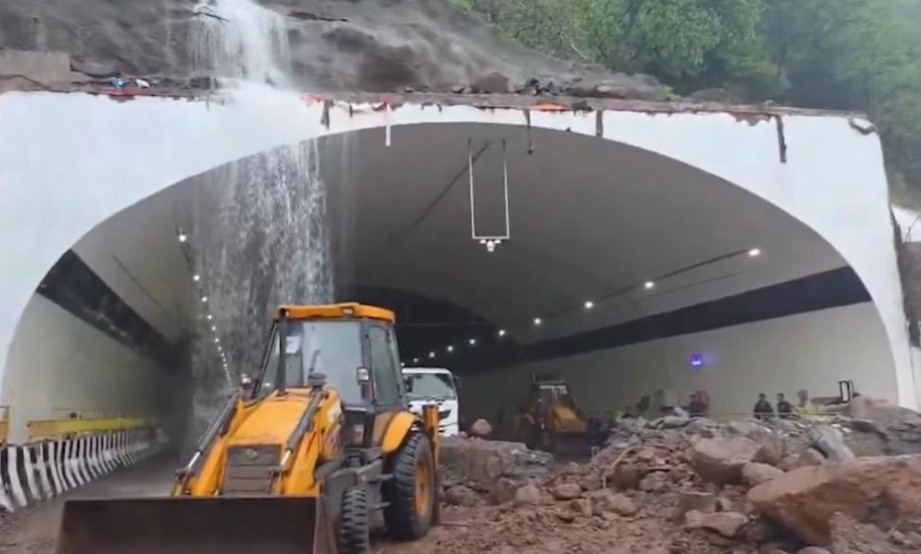
The incident occurred in the early hours of Monday when huge boulders and debris crashed onto the Pune-to-Mumbai carriageway near the exit of the first tunnel, damaging protective infrastructure and rendering the route unsafe for motorists. No casualties or injuries were reported, but the incident has reignited concerns over the resilience of major infrastructure projects against increasingly extreme weather events.
The Maharashtra State Road Development Corporation (MSRDC), which developed the project, said the landslide was caused by exceptionally heavy rainfall and described it as an “Act of God”, maintaining that the incident was the result of extraordinary natural forces rather than engineering failure.
According to MSRDC officials, the slope protection measures installed along the tunnel section performed as intended. The agency said rockfall mitigation systems, including steel rock-bolting and protective iron netting certified by experts from the Indian Institute of Technology (IIT) Bombay, had been installed on the mountainside to a height of around 15 metres.
However, officials explained that the boulders responsible for the landslide originated from nearly 150 metres above the tunnel, well beyond the protected zone. They said the unprecedented intensity of the rainfall triggered the collapse of rocks from much higher elevations, making the event difficult to predict or prevent.
MSRDC said the existing protective barriers absorbed much of the impact and significantly reduced the force of the falling rocks before they reached the roadway. Officials argued that without these safety systems, the consequences could have been catastrophic, particularly if vehicles had been passing through the affected section when the landslide occurred.
The corporation has ruled out any immediate structural concerns with the tunnel itself, stating that the rock-bolting system remains intact despite the incident.
Authorities have launched debris removal operations and temporarily closed the Pune-to-Mumbai carriageway of the 13.3-kilometre Missing Link project. Traffic travelling towards Mumbai has been diverted through the older Mumbai-Pune Expressway alignment and National Highway 48, while the Mumbai-to-Pune carriageway has reopened for normal traffic after safety inspections.
The landslide comes just days after the newly opened corridor attracted political attention following reports of potholes developing on sections of the roadway. Opposition parties questioned the quality of construction and demanded accountability, while Maharashtra Chief Minister Devendra Fadnavis dismissed the issue as minor and assured that necessary repairs would be undertaken.
Following Monday’s incident, however, engineers are expected to undertake a comprehensive geological assessment of the surrounding hillside once the monsoon season ends.
MSRDC officials said the review will determine whether rockfall protection systems should be extended further up the mountainside. Such work would require significant investment and approvals from the Forest Department, as parts of the proposed protection area fall within forest land.
The Mumbai-Pune Missing Link is among Maharashtra’s most ambitious road infrastructure projects. Designed to reduce travel time between Mumbai and Pune by nearly 20 to 30 minutes, the corridor bypasses the steep and accident-prone Khandala Ghat section through a series of tunnels and elevated viaducts. The project also aims to improve fuel efficiency, reduce congestion and enhance safety on one of India’s busiest expressway corridors.
However, the incident has once again highlighted the engineering challenges of constructing large transport infrastructure through the fragile Western Ghats, a UNESCO World Heritage region known for its steep terrain, heavy monsoon rainfall and frequent landslides.
Experts have long warned that intense rainfall events, which climate studies suggest are becoming more frequent across India’s western coast, can increase the likelihood of slope failures even where modern stabilisation measures have been installed.
With the monsoon season still underway, authorities are expected to maintain heightened surveillance across vulnerable sections of the expressway while assessing whether additional protective measures will be required to safeguard the new corridor against future rockfalls.