Indian companies are pursuing record overseas acquisitions to diversify globally, but rising capital outflows, higher energy imports and foreign investor exits are adding pressure on the rupee…writes Chetanya Mundachali.
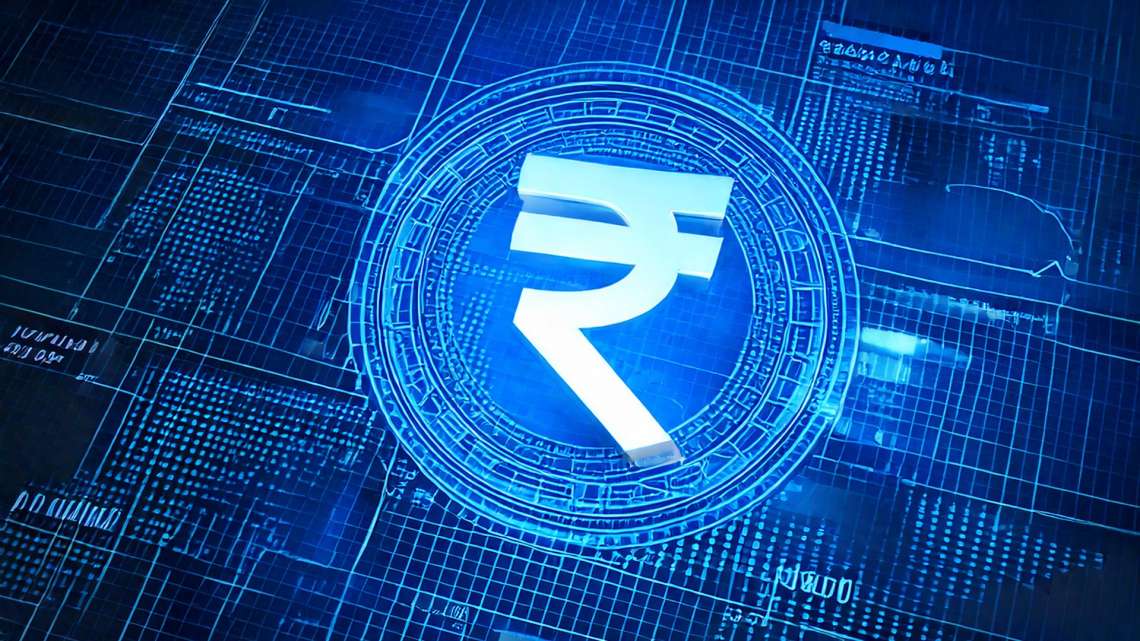
Indian companies are accelerating overseas acquisitions and investments at a record pace, a trend that is strengthening their global presence but also adding fresh pressure on the rupee. Large outbound capital flows, coupled with rising energy import costs and continued foreign investor withdrawals, have contributed to the currency’s weakness this year.
According to the report, Indian businesses announced overseas equity investments worth more than $14 billion during the first four months of the current financial year, compared with $18.7 billion during the entire corresponding period a year earlier. The pace of overseas acquisitions could make this the strongest year yet for outbound investments.
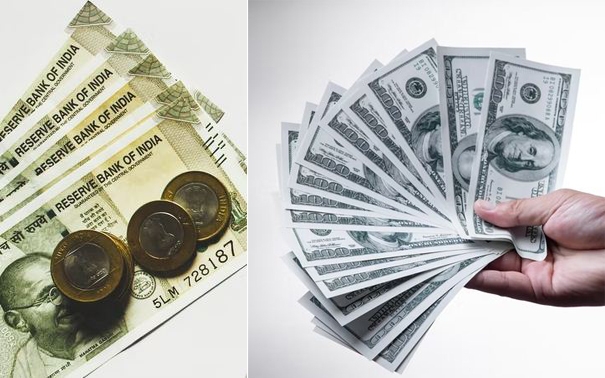
The surge comes at a time when the rupee has already been under strain. The currency has fallen by more than six per cent against the US dollar this year, making it one of Asia’s weakest-performing currencies. A major reason is India’s growing import bill, particularly for crude oil and gas, which has risen sharply following geopolitical tensions and supply disruptions.
Adding to the pressure is the sustained withdrawal of foreign portfolio investments. Overseas investors have pulled billions of dollars from Indian markets this year, reducing the supply of foreign exchange. India’s foreign exchange reserves have also declined significantly from their earlier highs, limiting the Reserve Bank of India’s ability to cushion currency volatility.
The Indian rupee appreciated by 5 paise to 96.11 against the US dollar in early trade on Wednesday, supported by a weaker US dollar and positive sentiment in domestic equity markets. However, the local currency’s gains remained capped due to rising crude oil prices, continued foreign institutional investor (FII) outflows, and escalating geopolitical tensions in West Asia.
At the interbank foreign exchange market, the rupee opened at 96.12 before strengthening marginally to 96.11, recovering slightly from Tuesday’s sharp decline. The domestic currency had settled at 96.16 against the US dollar in the previous session, its weakest close since May, after losing 48 paise.
Forex traders attributed the rupee’s recovery to a softer dollar index and improved investor sentiment in Indian equities. Nevertheless, concerns over higher global energy prices and geopolitical uncertainty continue to weigh on the currency.
Tensions in West Asia intensified after Iran warned that it could halt energy exports from the region in response to the United States reimposing a naval blockade on the Islamic Republic. According to a statement broadcast by Iranian state television, the country’s Revolutionary Guard declared that “the export of oil and gas from the region will be either for everyone or for no one,” raising fears of supply disruptions in global energy markets.
Commenting on the currency movement, Anil Kumar Bhansali, Head of Treasury and Executive Director at Finrex Treasury Advisors LLP, said the rupee came under considerable pressure on Tuesday as soaring crude oil prices, higher US Treasury yields and geopolitical tensions boosted demand for the US dollar.
Brent crude climbed to its highest level in over a month following the escalation in the US-Iran conflict. These developments pushed the rupee beyond the 96-mark for the first time since May, Bhansali asserted. He expects the rupee to trade in the 95.90–96.50 range in the near term, with market participants closely monitoring developments in the Middle East, crude oil prices and capital flows. Despite these headwinds, Indian corporations continue to look abroad for growth.
One of the biggest deals this year came from Sun Pharma, India’s largest pharmaceutical company by market value, which agreed to acquire US-based Organonfor$11.7 billion, marking the country’s largest overseas acquisition. Managing Director Kirti Ganorkar said the deal would help the company expand into new markets, including China.
Similarly, IT services company Persistent Systems launched a €1.3 billion bid for Munich-based Nagarroto strengthen its European presence and reduce reliance on the US market. Chief Executive Sandeep Kalra said the company wanted to avoid being overly dependent on a single geography, particularly amid uncertainty over US trade and outsourcing policies.
Industry executives say geopolitical uncertainty, including tensions in the Middle East and changing US trade policies, has encouraged companies to establish operations and acquire assets outside India. Businesses are seeking to reduce supply-chain risks while accessing new markets and customers. Cross-border acquisitions by Indian companies are on course to reach a record this year, increasing pressure on an already weak rupee as businesses expand overseas amid growing geopolitical uncertainty.
Experts note that outbound investments are largely driven by commercial considerations. Indian companies are competing globally for technology, skilled talent and strategic assets that can support long-term growth.
However, economists caution that rising overseas investments, combined with weaker foreign inflows, could widen the gap between capital entering and leaving the country. This imbalance may keep the rupee under pressure in the near term unless exports strengthen or foreign investment recovers.
The surge in overseas spending comes as foreign investors continue to pull money out of Indian markets at a record pace. More than $23 billion had been withdrawn by the end of June, largely because investors shifted capital towards markets with stronger artificial intelligence-driven growth opportunities.
These combined outflows have intensified pressure on the rupee, which has fallen more than six per cent against the US dollar this year, making it one of Asia’s weakest-performing currencies. The currency has also been affected by rising oil prices following the conflict involving Iran, which has sharply increased India’s energy import bill.
New Delhi spent more than $60 billion on oil and gas imports during the June quarter, a 23 per cent increase from the same period last year. At the same time, India’s foreign exchange reserves have declined by $54 billion since the conflict began, prompting authorities to introduce measures aimed at attracting more dollar inflows. Among these initiatives is a drive encouraging state-owned banks to attract higher foreign currency deposits from the Indian diaspora.
Global uncertainties often lead foreign investors to pull out investments from Indian markets, further depleting forex reserves and pressuring the currency.
Corporate India’s overseas expansion is also being driven by geopolitical concerns. Continuing tensions in the Middle East, along with trade policies introduced by US President Donald Trump, have encouraged companies to reduce their dependence on individual markets by pursuing acquisitions abroad.
While analysts view these overseas investments as commercially driven and essential for long-term competitiveness, they also warn that continued capital outflows could keep the rupee under pressure unless foreign investment returns and export earnings improv
India’s central bank is not too much worried over the decline of Rupee. Addressing concerns over the rupee’s depreciation, RBI Governor Sanjay Malhotra said the Indian currency had remained relatively stable compared with its global peers despite a stronger US dollar and heightened geopolitical uncertainty.
“The US dollar has strengthened following the conflict in West Asia, and many currencies have weakened against it. Viewed from a global perspective, the performance of the Indian rupee has been quite normal,” Malhotra said.
He also expressed confidence in India’s external sector, pointing to robust foreign direct investment (FDI) inflows. Gross FDI reached a record $95 billionin the previous financial year, while net FDI during the first two months of the current fiscal stood at around $7 billion, he said.
Malhotra maintained that India’s balance of payments remains fundamentally sound and dismissed concerns over the country’s external position.
“In the medium to long term, our balance of payments and the external sector will remain strong. There is no need to worry,” he said.
The governor’s remarks come amid renewed pressure on the rupee from rising crude oil prices, a stronger dollar and global market volatility. While the currency has weakened in recent months, the RBI has repeatedly stressed that it focuses on curbing excessive volatility rather than defending any specific exchange rate level.
In the latest development, the Indian rupee strengthened by 12 paise to close at 96.30 against the US dollar on Friday, supported by a strong rally in domestic equity markets and easing US Treasury yields. The local currency traded in a narrow range of 96.26 to 96.41 during the session after opening at 96.35. Market participants said the appreciation was aided by optimism in Indian stocks, although persistent geopolitical tensions in West Asia and higher crude oil prices continued to weigh on sentiment. Traders also pointed to likely intervention by the Reserve Bank of India (RBI), which helped support the rupee at weaker levels.
Despite the day’s gains, analysts cautioned that external risks remain. Brent crude rose more than 2 per cent to $86.17 a barrel as the conflict between the US and Iran intensified, while foreign institutional investors remained net sellers of Indian equities, offloading shares worth Rs 376.41 crore. The US-Iran conflict had a global economic fallout. However, India’s macroeconomic fundamentals offered support, with the country’s foreign exchange reserves increasing by $964 million to $675.16 billion in the week ended July 10. According to Geojit Investments’ Chief Investment Strategist V K Vijayakumar, the rupee could appreciate further if positive momentum in domestic markets continues.
Near-term consensus indicates the currency pair will stay within the 93–96 range as trade dynamics and global oil prices stabilize. Long-term outlooks show moderate depreciation against the dollar, though forecasts vary widely; banks project stabilization in the mid-80s to high-80s, while algorithms warn of potential shifts toward 108 by 2030. But India needs to formulate a strategy to balance capital inflows and outflows. The large capital outflows need to be monitored .by India’s regulatory bodies.
This is India’s call for regulating the cash outflows and ensure smooth transparency, so that the rupee does not depreciate but appreciate steadily by 2030.