November 23, 2021
3 mins read

‘National industrial strategy reflects UAE’s vision of sustainable growth’

The UAE has become a global model for economic development, built on competitive advantages and an advanced business ecosystem, said Dr. Sultan bin Ahmed Al Jaber, Minister of Industry and Advanced Technology…reports Asian Lite News

Dr Al Jaber also commended the UAE leadership’s wise vision and its direction to develop a sustainable and diversified economy for the next 50 years. He made the remarks as he delivered the inaugural address of the 4th Global Manufacturing and Industrialisation Summit (GMIS).

Al Jaber welcomed the audience and participants and then issued a call to fully leverage the potential of 4IR technologies, pointing to the initiatives launched by the UAE to accelerate their adoption across the industrial sector.
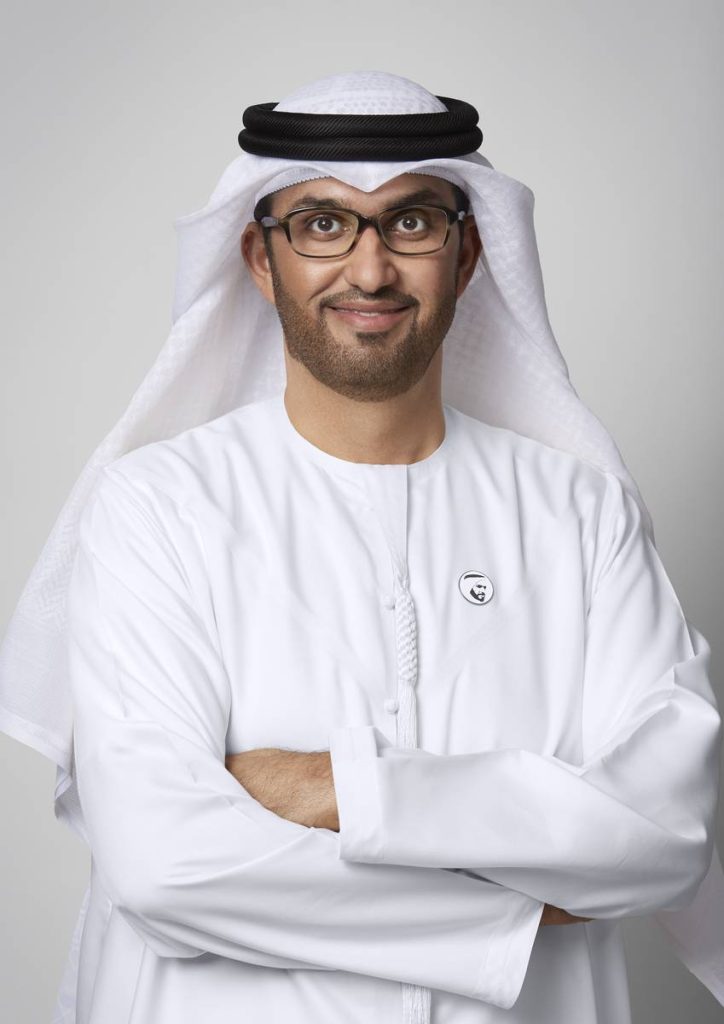
Sultan bin Ahmed Al Jaber

In his speech, Al Jaber also extended an open invitation to the world’s countries to collaborate with the UAE in its efforts to enhance international cooperation, invest in new opportunities and build a bright and prosperous global economy. He remarked that no economy exists in a vacuum, and that accelerating growth and progress requires synergies to create an effective and integrated industrial ecosystem.

Al Jaber highlighted the global industrial sector’s evolution, saying: “The first three industrial revolutions contributed to strengthening global GDP and raising it to historical levels. They also helped increase average life expectancy and multiplied average global income 15 times. We are currently witnessing the dawn of the Fourth Industrial Era, as 4IR technologies begin to advance the industrial sector and enhance its contribution to driving global growth and prosperity.”

Al Jaber explained that the UAE’s national industrial strategy focuses on sectors that contribute to producing high added value. It is also centers on diversifying the economy, achieving sustainable growth, and enhancing industrial competitiveness, particularly through the adoption of cutting-edge technology The strategy strives to achieve MoIAT’s goal of doubling the industrial sector’s contribution to national GDP in less than 10 years.

Regarding future plans, he clarified that MoIAT will focus on increasing the industrial sector’s contribution to building an economy that is the best and most dynamic in the world, in line with the Principles of the 50 adopted by the UAE’s wise leadership as a comprehensive development plan to advance growth and prosperity over the next 50 years.

Al Jaber emphasized that the UAE invites partners to participate in enhancing industrial growth based on smart partnerships to expand its industrial base while utilizing its current competitive advantages, including a world-class infrastructure, access to energy sources and raw materials, and diversity and cultural openness, which make the country a preferred destination for talents from more than 200 nationalities. He pointed out that UAE is seeking to enhance these advantages by refining regulatory frameworks, providing long-term residency visas for investors, entrepreneurs and highly skilled professionals, and facilitating access to finance in cooperation with the Emirates Development Bank.

Al Jaber also highlighted the Projects of the 50, which were launched by the UAE’s leadership to lay the foundation for growth for the next five decades. He noted the significant role played by industry and advanced technology in these projects. “As the UAE celebrates its 50th anniversary, our wise leadership has laid its vision for a prosperous future for the next 50 years. The role of industry is to contribute to building the best and most dynamic economy in the world.”

ALSO READ: UAE commits to lead disruptive growth of key industrial sectors

During his participation in the first day of the summit, Al Jaber met with Bandar bin Ibrahim Al-Khorayef, Saudi Minister of Industry and Mineral Resources, and Lord Gerry Grimstone, Minister for Investment at Department for International Trade and Department for Business Energy and Industrial Strategy in the United Kingdom.

GMIS 2021 will welcome more than 250 speakers, including four heads of states, representatives of heads of states, two former prime ministers, four senior UN representatives, the US Special Presidential Envoy for Climate Change, and more than 25 ministers from the UAE and across the globe, in addition to a prominent Emirati presence in more than 70 sessions during the summit.

Previous Story

Abu Dhabi Smart City Summit begins today

Next Story

Strict Covid curbs spark riots in Europe

Previous Story

Abu Dhabi Smart City Summit begins today

Next Story

Strict Covid curbs spark riots in Europe

Latest from -Top News

Pakistan Risks Overstretching Itself in Yemen War

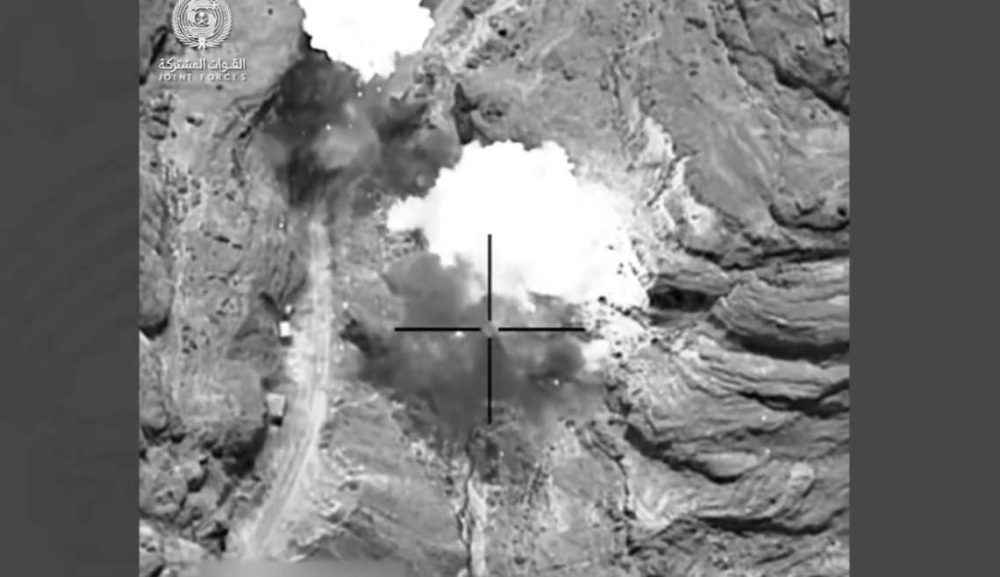
Pakistan’s expanding military role in Saudi Arabia amid the Yemen conflict could strain its defence resources and fragile finances…reports Asian Lite News Desk Pakistan’s military involvement in the war in Yemen may prove unsustainable because of mounting financial pressures and competing security demands, according to a new report. Islamabad’s growing military presence in Saudi Arabia risks stretching its defence resources while exposing the country to greater strategic and economic challenges. An article by Andrew Wilson in One World Outlook describes Pakistan’s involvement as a case of “fiscal and strategic overreach”, arguing that the country lacks the financial flexibility to sustain an expanded military commitment. Pakistan’s external finances depend heavily on an International Monetary Fund (IMF) programme, financial support from Gulf countries and remittances from Pakistani workers in the region. The report argues that deeper military involvement in the conflict could place additional pressure on these sources of financial stability. It also warns that deploying troops and military equipment abroad could weaken Pakistan’s capacity to address security challenges along its eastern border and deal with two domestic insurgencies. The move could also draw Islamabad into a conflict it has sought to approach cautiously. A Reuters report in May, citing Pakistani security and government sources, said Islamabad had deployed around 8,000 troops, a squadron of approximately 16 aircraft, mostly JF-17 fighter jets, two drone squadrons and a Chinese HQ-9 air-defence battery to Saudi Arabia. According to those sources, Riyadh was financing the deployment, with Pakistani personnel operating the equipment. The sources also said a confidential agreement contemplated the possibility of deploying up to 80,000 troops. Islamabad has not confirmed those figures, although it has acknowledged its military presence in Saudi Arabia, including the deployment of fighter jets at King Abdulaziz Air Base from April. The One World Outlook article argues that Saudi financial support can cover allowances and operating expenses but cannot easily replace military equipment needed elsewhere or resolve the political and strategic challenges of participating in the Yemen conflict. Pakistan’s defence budget is another concern. For the 2026-27 financial year, the federal government allocated PKR 3 trillion, or approximately $10.8 billion, to defence services. The allocation represents an 18 per cent increase from the original PKR 2.55 trillion provision and amounts to around 2.1 per cent of projected gross domestic product (GDP). Defence spending accounts for approximately 16 per cent of the federal government’s PKR 18.8 trillion expenditure. Military pensions are budgeted separately at PKR 822 billion, while debt servicing costs stand at approximately PKR 8 trillion, more than two-and-a-half times the defence allocation. The report argues that these competing financial obligations leave little room for additional military expenditure without placing further pressure on public finances. Pakistan’s reliance on IMF assistance also limits its fiscal flexibility. The country must meet the conditions attached to the programme, including a primary budget surplus target of 2 per cent of GDP and continued restraint on development spending. According to the article, these requirements make it difficult for Islamabad to finance an additional military commitment without compromising other budgetary priorities. Pakistan’s economic indicators offer limited reassurance. Economic growth for the 2025-26 financial year is estimated at between 3.6 and 3.7 per cent, while inflation reached approximately 10.3 per cent in September following an energy price shock. Foreign exchange reserves stood at around $21.5 billion at the end of September. Although this marks an improvement from the low levels recorded in 2023, the report notes that the reserves cover only a few months of imports. Financial assistance from Gulf partners remains central to Pakistan’s external stability. The article says Islamabad holds approximately $8 billion in Saudi deposits at its central bank. In July, the State Bank of Pakistan said Riyadh had extended the maturity of $5 billion in deposits to December 2028, easing the country’s immediate external financing requirements. A further $3 billion deposit was also extended in the spring. However, the article argues that these arrangements provide temporary relief rather than long-term financial independence, particularly as regional conflict threatens the stability of the Gulf economies on which Pakistan relies. The report concludes that Pakistan faces a difficult balance between supporting Saudi Arabia militarily and preserving the financial and military resources needed to address its domestic and regional challenges.
Go toTop

Don't Miss

India, UAE to boost cooperation in industries, advanced tech

The MoU aims at strengthening and developing industries in both

Dr. Abu-Ghazaleh lectures on the ‘Arab Economy in a New International Order’

He pointed out that the world is changing in every