November 23, 2021
3 mins read

Strict Covid curbs spark riots in Europe

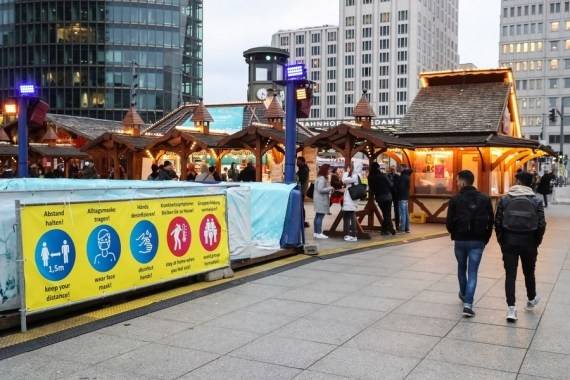
The demonstration took place near the Brussels North Station, with protesters brandishing banners saying “Together for Freedom” and “Resistance”….reports Asian Lite News

 In response to the tightened Covid-19 measures, demonstrations were held across Europe this past weekend, amid rising new cases and a new wave of the pandemic.

An estimated 35,000 people gathered in central Brussels on Sunday to protest against the reinforced measures, which include the mandatory use of the ‘COVID Safe Ticket’ (CST) and the obligation to wear face masks in areas where a CST is required, reports Xinhua news agency.

The demonstration took place near the Brussels North Station, with protesters brandishing banners saying “Together for Freedom” and “Resistance”.

The police used water cannons and tear gas to subdue demonstrators who threw fireworks at them.

Forty-two people were detained and two arrested, local police said late on Sunday and the mayor of the City of Brussels, Philippe Close, “strongly condemned” the riots.

In Rotterdam, the demonstration against the Covid-19 restrictions started on November 19 when several hundred protesters gathered in the city centre throwing fireworks and setting cars — among them at least one police vehicle — ablaze.

The protest escalated into riot, and the police responded with water cannons and tear gas.

Around 50 people were arrested and four were injured and sent to hospital for treatment.

Paris, Sept. 4, 2020 (Xinhua) — People wearing masks walk on the Trocadero Place near the Eiffel Tower in Paris, France, Sept. 3, 2020. The French government aims to mobilize 100 billion euros (118 billion U.S. dollars) in a recovery plan “of historic size” to help the country recover from the coronavirus pandemic crisis, Prime Minister Jean Castex announced on Thursday. Ecological transition, competitiveness and social cohesion were identified as the three pillars of the plan dubbed “France Relaunch,” which Castex said was “the most massive announced to date among major European countries.” (Xinhua/Gao Jing/IANS)

On Monday, Dutch Prime Minister Mark Rutte condemned the riots and warned that everything possible would be done to punish the rioters.

“These are not corona protests, but pure violence by idiots, which has nothing to do with demonstrating,” Rutte said after consulting his fellow ministers.

Across Greece, restaurants and cafes remained closed lin protest against the government’s new restrictions.

The measures have hit thousands of businesses, with many of them facing the risk of permanent closure, and further state support is urgently needed, the Panhellenic Federation of Restaurants and Related Professions (POESE) said on Monday.

“We are shutting down today so that we will not have to shut down forever,” protesters chanted during a rally held in the center of Athens.

“Catering stays closed throughout Greece” read banners on the closed doors of restaurants and cafes.
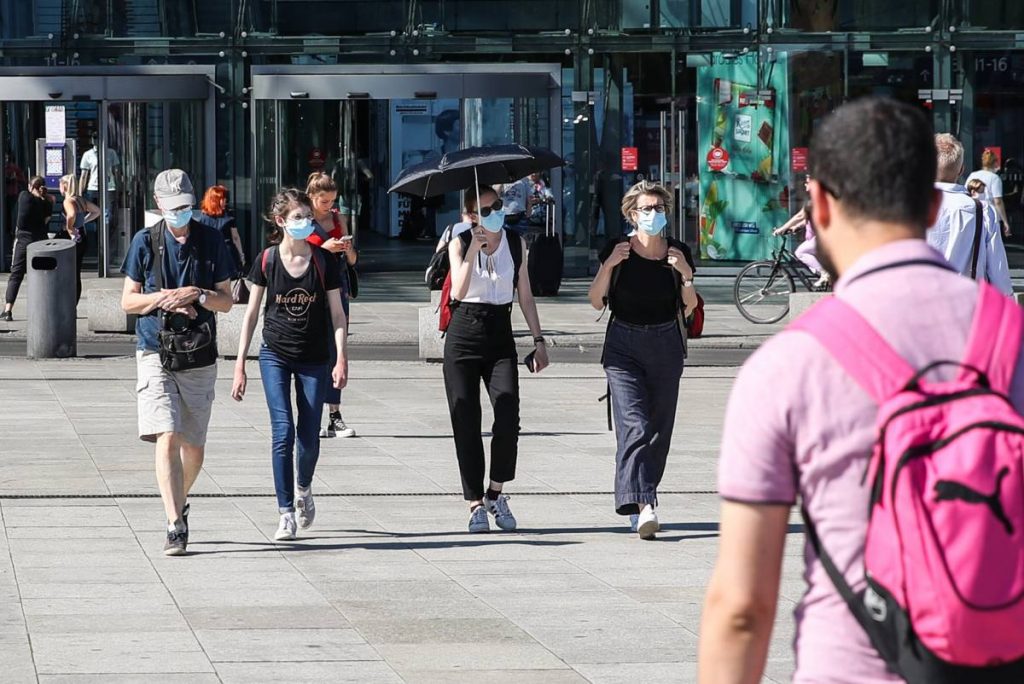
Pedestrians wearing face masks are seen in Berlin, capital of Germany

With the onset of the winter season in the Northern Hemisphere, the European Union (EU) fears a new wave of Covid-19 infections.

The level of concern for the situation in the EU was rated at 8.3 of 10, or “very high” on November 19 by the European Center for Disease prevention and Control (ECDC).

Wearing masks, hand-washing and ventilation are crucial non-pharmaceutical measures that must continue in order to fight Covid-19, and “it remains extremely important that we follow the non-pharmaceutical interventions”, Stefan De Keersmaecker, European Commission spokesperson for Health, said on Monday.

French Minister of Labour Elisabeth Borne on Monday called on companies to strictly respect barrier gestures, especially the mask mandate, in order to enable the country to face the fifth Covid-19 wave.

In light of the worsening situation, France’s Vaccine Strategy Orientation Council (COSV) on Monday suggested that a booster shot for all adults should be considered.

In the face of the growing pandemic, Germany’s federal states have recently tightened their respective Covid-19 measures.

The states of Bavaria and Saxony have cancelled their Christmas markets this year, and Hesse decided that only those vaccinated or recovered from Covid-19 will be allowed to enter indoor areas of restaurants, sports facilities and cultural institutions.

ALSO READ: Austria first European country to reimpose full lockdown

Previous Story

‘National industrial strategy reflects UAE’s vision of sustainable growth’

Next Story

Britain adds Covaxin to list of valid jabs for travel

Previous Story

‘National industrial strategy reflects UAE’s vision of sustainable growth’

Next Story

Britain adds Covaxin to list of valid jabs for travel

Latest from -Top News

Pakistan Risks Overstretching Itself in Yemen War

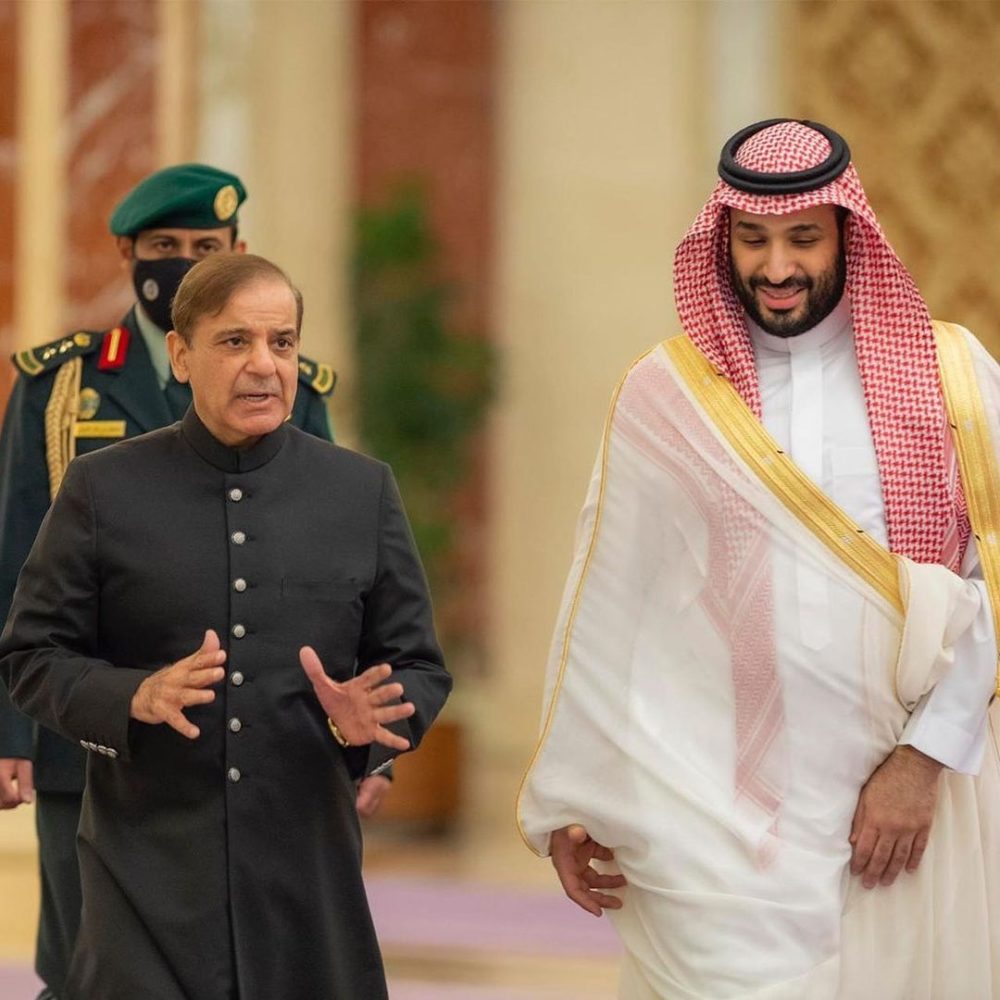
Pakistan’s expanding military role in Saudi Arabia amid the Yemen conflict could strain its defence resources and fragile finances…reports Asian Lite News Desk Pakistan’s military involvement in the war in Yemen may prove unsustainable because of mounting financial pressures and competing security demands, according to a new report. Islamabad’s growing military presence in Saudi Arabia risks stretching its defence resources while exposing the country to greater strategic and economic challenges. An article by Andrew Wilson in One World Outlook describes Pakistan’s involvement as a case of “fiscal and strategic overreach”, arguing that the country lacks the financial flexibility to sustain an expanded military commitment. Pakistan’s external finances depend heavily on an International Monetary Fund (IMF) programme, financial support from Gulf countries and remittances from Pakistani workers in the region. The report argues that deeper military involvement in the conflict could place additional pressure on these sources of financial stability. It also warns that deploying troops and military equipment abroad could weaken Pakistan’s capacity to address security challenges along its eastern border and deal with two domestic insurgencies. The move could also draw Islamabad into a conflict it has sought to approach cautiously. A Reuters report in May, citing Pakistani security and government sources, said Islamabad had deployed around 8,000 troops, a squadron of approximately 16 aircraft, mostly JF-17 fighter jets, two drone squadrons and a Chinese HQ-9 air-defence battery to Saudi Arabia. According to those sources, Riyadh was financing the deployment, with Pakistani personnel operating the equipment. The sources also said a confidential agreement contemplated the possibility of deploying up to 80,000 troops. Islamabad has not confirmed those figures, although it has acknowledged its military presence in Saudi Arabia, including the deployment of fighter jets at King Abdulaziz Air Base from April. The One World Outlook article argues that Saudi financial support can cover allowances and operating expenses but cannot easily replace military equipment needed elsewhere or resolve the political and strategic challenges of participating in the Yemen conflict. Pakistan’s defence budget is another concern. For the 2026-27 financial year, the federal government allocated PKR 3 trillion, or approximately $10.8 billion, to defence services. The allocation represents an 18 per cent increase from the original PKR 2.55 trillion provision and amounts to around 2.1 per cent of projected gross domestic product (GDP). Defence spending accounts for approximately 16 per cent of the federal government’s PKR 18.8 trillion expenditure. Military pensions are budgeted separately at PKR 822 billion, while debt servicing costs stand at approximately PKR 8 trillion, more than two-and-a-half times the defence allocation. The report argues that these competing financial obligations leave little room for additional military expenditure without placing further pressure on public finances. Pakistan’s reliance on IMF assistance also limits its fiscal flexibility. The country must meet the conditions attached to the programme, including a primary budget surplus target of 2 per cent of GDP and continued restraint on development spending. According to the article, these requirements make it difficult for Islamabad to finance an additional military commitment without compromising other budgetary priorities. Pakistan’s economic indicators offer limited reassurance. Economic growth for the 2025-26 financial year is estimated at between 3.6 and 3.7 per cent, while inflation reached approximately 10.3 per cent in September following an energy price shock. Foreign exchange reserves stood at around $21.5 billion at the end of September. Although this marks an improvement from the low levels recorded in 2023, the report notes that the reserves cover only a few months of imports. Financial assistance from Gulf partners remains central to Pakistan’s external stability. The article says Islamabad holds approximately $8 billion in Saudi deposits at its central bank. In July, the State Bank of Pakistan said Riyadh had extended the maturity of $5 billion in deposits to December 2028, easing the country’s immediate external financing requirements. A further $3 billion deposit was also extended in the spring. However, the article argues that these arrangements provide temporary relief rather than long-term financial independence, particularly as regional conflict threatens the stability of the Gulf economies on which Pakistan relies. The report concludes that Pakistan faces a difficult balance between supporting Saudi Arabia militarily and preserving the financial and military resources needed to address its domestic and regional challenges.
Go toTop

Don't Miss

Unprecedented winter drought grips Europe

This comes after a record-setting hot and dry summer last

Biden orders probe into cyberattack that hit over 1,000 businesses

The hackers, who struck on Friday, hijacked widely-used tech management