Most navies that shop on the global arms market look for weapons that can be easily integrated into their existing ships and infrastructure. A bulky, unproven anti-ship ballistic missile does not fit that profile, writes Commodore Ranjit Rai (Retd)
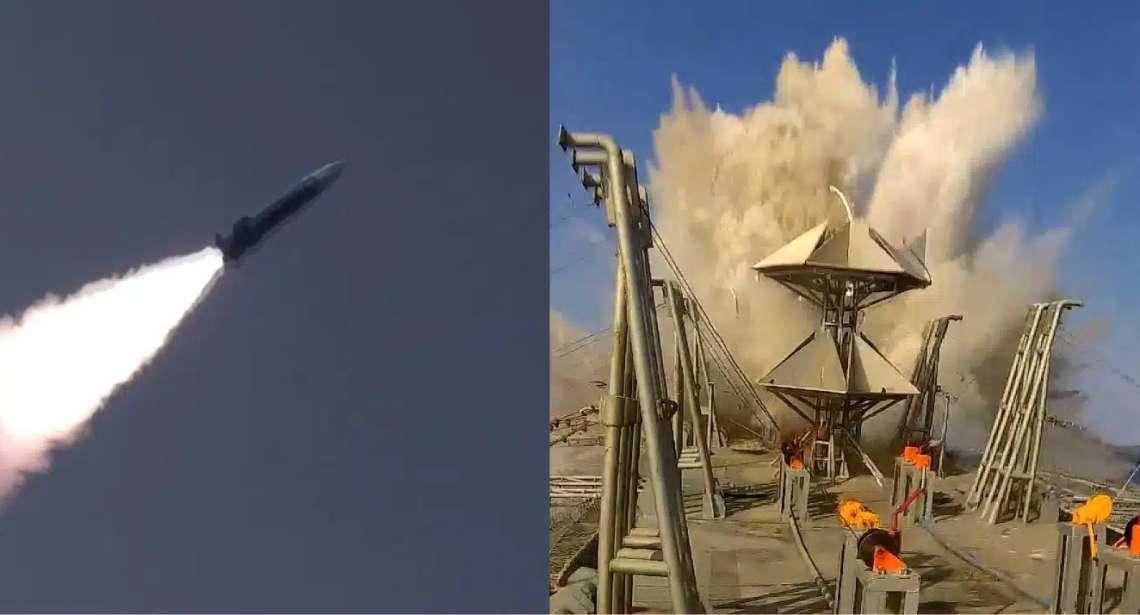
The SMASH anti-ship ballistic missile is often discussed as a symbol of Pakistan’s growing focus on sea-based strike capability. Yet despite the attention it receives at home, there is no sign that the missile is being positioned for the international arms market. All available information suggests that SMASH is a system being developed mainly for Pakistan’s own navy. There is no confirmed export interest, no public marketing push and no indication that any foreign customer is considering the missile. For now, SMASH appears to be a strictly domestic project with limited relevance beyond Pakistan’s borders. One of the strongest reasons for this is the missile’s size and complexity. SMASH is reportedly a large and technically demanding weapon that requires advanced launch platforms, specialised support systems and trained crews. Such systems are expensive to operate and maintain. Most navies that shop on the global arms market look for weapons that can be easily integrated into their existing ships and infrastructure. A bulky, unproven anti-ship ballistic missile does not fit that profile. Without a clear record of successful operational use, few foreign buyers would be willing to take on such risk.
Another key limitation is the lack of battlefield validation. Export buyers usually want proof that a weapon works as advertised. They look for test data, real-world performance records or examples of successful deployment. In the case of SMASH, there is no publicly available evidence that the missile has been used operationally, nor is there data from realistic trial conditions that foreign navies could independently evaluate. Without this, the missile remains a concept weapon rather than a proven product on the international market.
Pakistan’s own history with missile exports also offers little confidence that SMASH will be different. While the country has developed several short- and medium-range missile systems over the years, its record of exporting complex strategic weapons is limited. Most of Pakistan’s missile programmes have been focused on meeting domestic security needs rather than building an export industry. Unlike some major arms producers, Pakistan does not yet have a well-established global network for marketing, servicing and supporting advanced missile systems overseas.

There is also the matter of international scrutiny. Anti-ship ballistic missiles fall into a sensitive category of weapons that attract close attention from global non-proliferation bodies. Even though such systems are not formally banned, their transfer across borders is heavily watched. Any attempt to export a missile like SMASH would likely trigger diplomatic pressure and regulatory hurdles. Almost all potential buyers would be cautious about inviting such attention. This would be especially true of smaller navies that prefer to keep a low profile in regional security politics.
Furthermore, cost is another major barrier. High-end missile systems are not just expensive to buy; they are expensive to sustain.They require regular testing, specialised spare parts and continuous training. Countries that can afford such systems often prefer to buy from long-established suppliers with a track record of reliability and support. Pakistan, still building its defence export reputation, would find it difficult to compete in this segment without offering either proven performance or significant political incentives. There is also no visible effort to promote SMASH internationally. Defence exhibitions, arms fairs and official marketing brochures are common tools used by exporting nations to attract buyers. So far, there has been no serious public display of SMASH at major global defence shows, no detailed technical sheets circulated to foreign delegations, and no official announcements hinting at export ambitions. This silence strongly suggests that the missile is not being positioned as an export product at this stage.
For Pakistan, the strategic value of SMASH appears to be rooted in its own maritime defence planning. The missile fits into a broader effort to strengthen coastal deterrence and create an additional threat for hostile surface vessels operating in nearby waters. In this context, SMASH serves a local purpose rather than a commercial one. It is designed to influence regional naval calculations, not to build an export portfolio. The limited proliferation potential of SMASH also reflects a broader shift in how advanced missiles are treated globally. Nations are increasingly cautious about transferring strategic systems that could alter regional military balances or trigger arms races. Even traditional arms exporters are selective about who receives high-end missile technology. Pakistan, facing its own diplomatic constraints, is even less likely to push aggressively for exports in this category.
Some observers argue that future operational success could change this picture. If SMASH were to demonstrate consistent, reliable performance in realistic conditions, it might attract interest from a few like-minded states. But even in such a scenario, the pool of potential buyers would remain small.Only navies with specific strategic needs, suitable platforms and the political space to absorb such a weapon would consider it. This is a narrow market by any standard.
At present, all available signs point in one direction. SMASH is a weapon built for Pakistan’s own navy, shaped by its coastal security concerns and regional deterrence goals. It is not a missile designed with global customers in mind. Its size, cost, technical demands and lack of proven performance make it a poor fit for the international arms market. Combined with Pakistan’s limited export track record and the political sensitivities around missile transfers, the scope for proliferation remains very low.
While SMASH may carry symbolic weight as a domestic military project, its strategic value is confined largely to Pakistan’s own operational planning. There is no evidence of export interest, no visible marketing push and no history to suggest that Pakistan is preparing to sell such a system abroad. For the foreseeable future, SMASH is best understood as a locally focused missile with little chance of becoming an international product.
(Commodore Ranjit B Rai (Retd) is the author of the book ‘The Indian Navy @75: Reminiscing the Voyage. He is an RNSC-qualified officer who served as Director Naval Intelligence and Director Naval Operations and writes on maritime matters. He also served as India Representative of Waterman Steam Ships USA and curated a New Delhi Maritime Museum.)