November 17, 2025
2 mins read

Saudi bus tragedy: India Sets Up Camp in Madinah

The delegation will meet the Indian embassy officials and Saudi authorities to coordinate the efforts to help the families of the deceased….reports Asian Lite News

The Indian Consulate General in Jeddah has established a camp office at the Indian Haj Pilgrims Office in Madinah to provide support to the families of Indian Umrah pilgrims who tragically lost their lives in a bus accident.

The Indian Haj Pilgrims Office is located in Room No. 104, First floor, Saroor Taiba Al-Dahbiya Hotel, Al Masani, Madinah, according to a post by the Consulate General on ‘X’.

Meanwhile, a delegation of the Telangana government led by Minorities Welfare Minister Mohammed Azharuddin left for Saudi Arabia on Monday night to provide assistance to the families of the victims.

The delegation includes All India Majlis-e-Ittehadul Muslimeen (AIMIM) MLA Majid Hussain and Secretary, Minorities Welfare Department, B. Shafiullah.

The delegation will meet the Indian embassy officials and Saudi authorities to coordinate the efforts to help the families of the deceased.

The delegation was sent as per the decision taken by the Telangana Cabinet on Monday. The Cabinet decided to pay Rs 5 lakh ex gratia to the families of all deceased.

At least 45 Umrah pilgrims from Hyderabad were killed when the bus carrying them collided with a diesel tanker near the holy city of Madinah late on Sunday night. A pilgrim survived the accident and was undergoing treatment at a local hospital.

According to an official statement from the state government, funeral rites of the deceased may be performed in Saudi Arabia, as per religious customs.

As per the decision taken by the Cabinet, the government will arrange for two family members of each bereaved family to travel to Saudi Arabia to participate in the last rites.

The government said it took swift, multi-level action on the tragic bus accident, which occurred when the bus is said to have collided with a diesel tanker about 30 km from Madinah.

Chief Minister Revanth Reddy immediately directed the Chief Secretary and DGP to coordinate with the Ministry of External Affairs (MEA), the Indian Embassy, Riyadh and Saudi authorities to verify details.

To assist families and ensure uninterrupted communication, helplines have been activated in Hyderabad and New Delhi.

Industries and IT Minister D. Sridhar Babu spoke to Minister of State for External Affairs Kirti Vardhan Singh seeking early confirmation, support, and assistance from the Government of India.

Telangana Resident Commissioner in New Delhi, Dr Shashank Goel, chaired an emergency review meeting at Telangana Bhavan. Officials were instructed to maintain constant liaison with MEA, the Indian Embassy in Riyadh, and Saudi authorities.

A dedicated Liaison Officer from Telangana Bhavan has been deputed to the MEA office for 24/7 coordination. Dr Gaurav Uppal, Secretary (Coordination), and senior officials took part in the meeting.
Previous Story

BANAFSHEH HEMMATI: Reframing Geometry, Revaluing Craft

Next Story

US Lawmakers Rally for India

Previous Story

BANAFSHEH HEMMATI: Reframing Geometry, Revaluing Craft

Next Story

US Lawmakers Rally for India

Latest from -Top News

Pakistan Risks Overstretching Itself in Yemen War

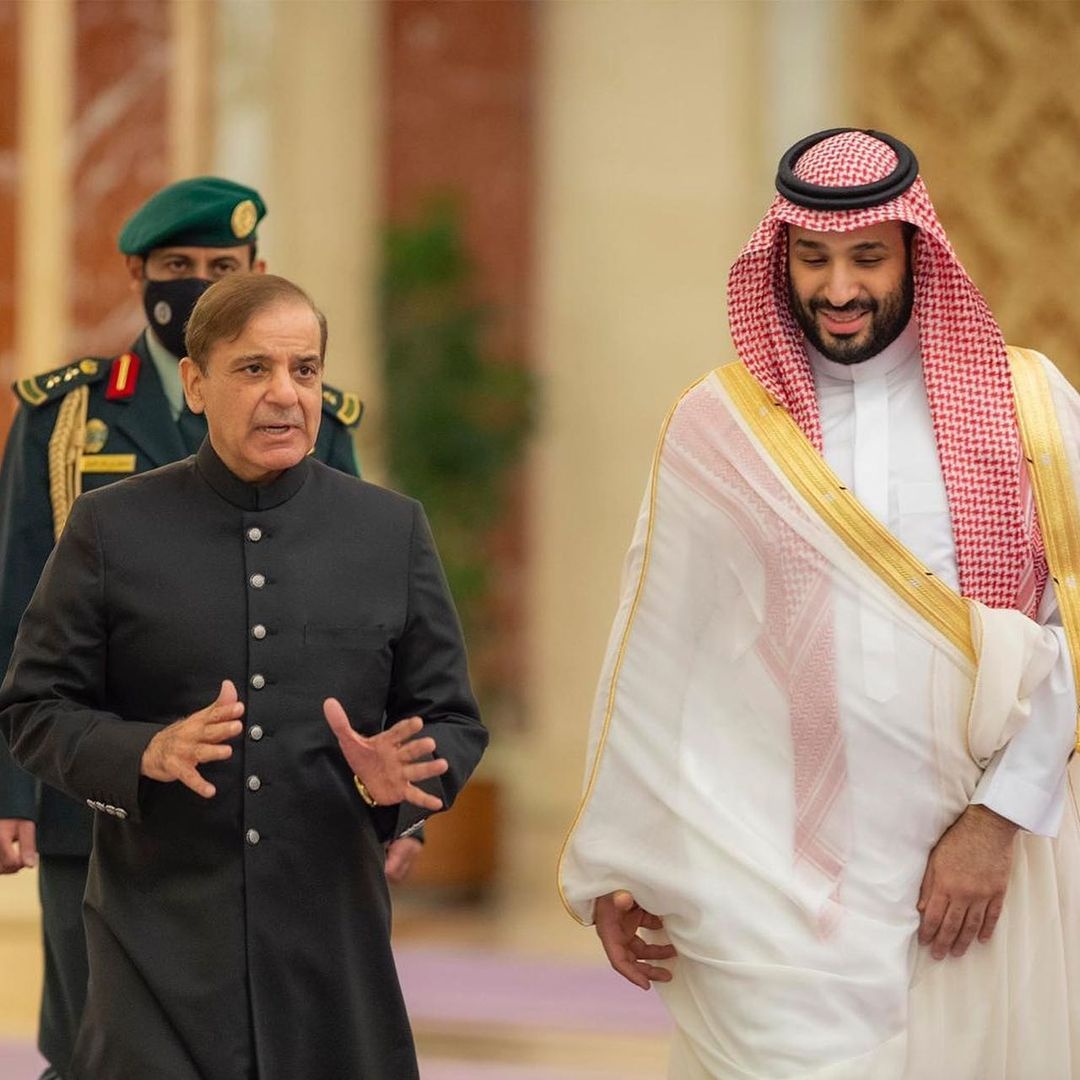
Pakistan’s expanding military role in Saudi Arabia amid the Yemen conflict could strain its defence resources and fragile finances…reports Asian Lite News Desk Pakistan’s military involvement in the war in Yemen may prove unsustainable because of mounting financial pressures and competing security demands, according to a new report. Islamabad’s growing military presence in Saudi Arabia risks stretching its defence resources while exposing the country to greater strategic and economic challenges. An article by Andrew Wilson in One World Outlook describes Pakistan’s involvement as a case of “fiscal and strategic overreach”, arguing that the country lacks the financial flexibility to sustain an expanded military commitment. Pakistan’s external finances depend heavily on an International Monetary Fund (IMF) programme, financial support from Gulf countries and remittances from Pakistani workers in the region. The report argues that deeper military involvement in the conflict could place additional pressure on these sources of financial stability. It also warns that deploying troops and military equipment abroad could weaken Pakistan’s capacity to address security challenges along its eastern border and deal with two domestic insurgencies. The move could also draw Islamabad into a conflict it has sought to approach cautiously. A Reuters report in May, citing Pakistani security and government sources, said Islamabad had deployed around 8,000 troops, a squadron of approximately 16 aircraft, mostly JF-17 fighter jets, two drone squadrons and a Chinese HQ-9 air-defence battery to Saudi Arabia. According to those sources, Riyadh was financing the deployment, with Pakistani personnel operating the equipment. The sources also said a confidential agreement contemplated the possibility of deploying up to 80,000 troops. Islamabad has not confirmed those figures, although it has acknowledged its military presence in Saudi Arabia, including the deployment of fighter jets at King Abdulaziz Air Base from April. The One World Outlook article argues that Saudi financial support can cover allowances and operating expenses but cannot easily replace military equipment needed elsewhere or resolve the political and strategic challenges of participating in the Yemen conflict. Pakistan’s defence budget is another concern. For the 2026-27 financial year, the federal government allocated PKR 3 trillion, or approximately $10.8 billion, to defence services. The allocation represents an 18 per cent increase from the original PKR 2.55 trillion provision and amounts to around 2.1 per cent of projected gross domestic product (GDP). Defence spending accounts for approximately 16 per cent of the federal government’s PKR 18.8 trillion expenditure. Military pensions are budgeted separately at PKR 822 billion, while debt servicing costs stand at approximately PKR 8 trillion, more than two-and-a-half times the defence allocation. The report argues that these competing financial obligations leave little room for additional military expenditure without placing further pressure on public finances. Pakistan’s reliance on IMF assistance also limits its fiscal flexibility. The country must meet the conditions attached to the programme, including a primary budget surplus target of 2 per cent of GDP and continued restraint on development spending. According to the article, these requirements make it difficult for Islamabad to finance an additional military commitment without compromising other budgetary priorities. Pakistan’s economic indicators offer limited reassurance. Economic growth for the 2025-26 financial year is estimated at between 3.6 and 3.7 per cent, while inflation reached approximately 10.3 per cent in September following an energy price shock. Foreign exchange reserves stood at around $21.5 billion at the end of September. Although this marks an improvement from the low levels recorded in 2023, the report notes that the reserves cover only a few months of imports. Financial assistance from Gulf partners remains central to Pakistan’s external stability. The article says Islamabad holds approximately $8 billion in Saudi deposits at its central bank. In July, the State Bank of Pakistan said Riyadh had extended the maturity of $5 billion in deposits to December 2028, easing the country’s immediate external financing requirements. A further $3 billion deposit was also extended in the spring. However, the article argues that these arrangements provide temporary relief rather than long-term financial independence, particularly as regional conflict threatens the stability of the Gulf economies on which Pakistan relies. The report concludes that Pakistan faces a difficult balance between supporting Saudi Arabia militarily and preserving the financial and military resources needed to address its domestic and regional challenges.

UK and Germany Ratify Kensington Treaty

Britain and Germany ratify the Kensington Treaty, agreeing new cooperation on AI, quantum research, defence and security while targeting investment, jobs and Russian hybrid threats…reports Asian Lite News Desk Britain and Germany
Go toTop

Don't Miss

India slams Pakistan for ‘politicising’ Chess Olympiad

Pakistan has earlier announced its decision to withdraw from the

RAF Support For Saudi Fight

Britain will provide limited defensive air-to-air refuelling support to Saudi