September 3, 2025
4 mins read

Stalin to Deliver Oxford Address in Tamil

During the Germany leg of his trip, Stalin oversaw the signing of 26 MoUs worth Rs 7,020 crore, expected to generate more than 15,000 jobs in Tamil Nadu…reports Asian Lite News

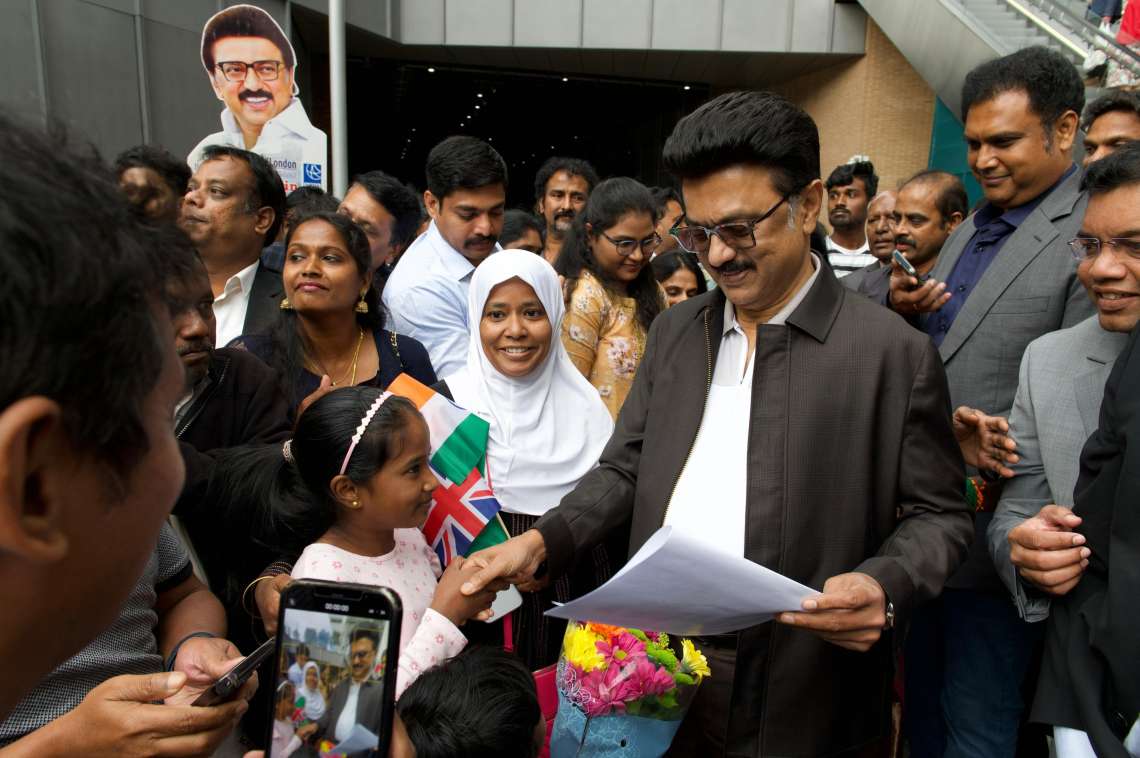
Tamil Nadu Chief Minister and Dravida Munnetra Kazhagam (DMK) President M. K. Stalin is set to make history this week when he addresses students and scholars at the University of Oxford in Tamil, as part of a two-nation tour that has already yielded significant foreign investment commitments for his state.

On Thursday, 4 September 2025, Stalin will speak at St Antony’s College, Oxford, during an event that will be closely watched not only in India but also among the Tamil diaspora worldwide. His address will form part of a two-day conference titled The Self-Respect Movement and its Legacies, sponsored by the Asian Studies Centre and Balliol College, which has drawn scholars from across the globe. The choice of Tamil as the language of delivery is regarded as both symbolic and politically resonant, underlining the international reach of a regional language that has long been central to Tamil Nadu’s identity politics.

The Oxford lecture will therefore serve not only as an academic engagement but also as a rare opportunity for an Indian opposition leader to present his vision to an international audience. Political observers suggest that the choice to deliver the address in Tamil, rather than in English, reflects a deliberate assertion of cultural identity and self-respect, in line with the legacy of the Dravidian movement that his party embodies.

The Chief Minister’s European visit has already generated considerable attention back home, thanks to a series of investment announcements in Germany. Speaking at the Tamil Nadu Rising Investors’ Conference in Munich earlier this week, Stalin declared, “Just as Germany is the industrial backbone of Europe, Tamil Nadu is the industrial heartbeat of India. Tamil Nadu is India’s Germany.”

During the Germany leg of his trip, Stalin oversaw the signing of 26 Memoranda of Understanding (MoUs) worth Rs 7,020 crore, expected to generate more than 15,000 jobs in Tamil Nadu. These agreements spanned sectors such as renewable energy, automotive components, and advanced research and development.

A government release highlighted three major agreements as particularly significant. Munich-based Knorr-Bremse, a global leader in braking systems, will invest Rs 2,000 crore to establish a state-of-the-art manufacturing facility in Tamil Nadu. The project, focusing on railway doors and braking systems, is projected to create 3,500 jobs while reinforcing the state’s growing reputation in advanced engineering and rail components.

The Nordex Group, one of the world’s leading wind turbine manufacturers, has committed Rs 1,000 crore to expand its operations in Tamil Nadu, generating an estimated 2,500 jobs. This investment is expected to further strengthen the state’s position as a hub for renewable energy and green industrialisation.

Meanwhile, ebm-papst, a company specialising in energy-efficient electric motors and air movement solutions, announced an expansion of its Global Capability Centre and manufacturing base in Tamil Nadu. With a proposed investment of Rs 201 crore over five years, the initiative is expected to add 250 jobs across the HVAC, automotive, and industrial sectors.

Stalin also held discussions with executives of BMW Group, which already has a substantial presence in Tamil Nadu. Talks reportedly centred on scaling up operations in the electric vehicle (EV) sector, an area where Tamil Nadu has positioned itself as a national leader. BMW leaders were said to have reaffirmed their long-term commitment to the state, citing both its established industrial ecosystem and its growing EV infrastructure.

In a post on social media platform X, Stalin hailed the success of the Germany visit, writing: “Global leaders across renewable energy, automotive components and advanced R&D have chosen Tamil Nadu for their next phase of growth.” He added that the MoUs demonstrated “the world’s growing confidence in our state” and positioned Tamil Nadu as a centre of excellence capable of shaping the global industrial landscape.

Analysts note that the timing of Stalin’s international outreach is politically significant. With the DMK the fifth-largest party in the Lok Sabha and a key player in the national opposition alliance, Stalin’s efforts to build an international profile may strengthen his credentials as a leader with influence beyond Tamil Nadu.

His Oxford address, set against the backdrop of the Self-Respect Movement conference, is likely to be interpreted both as a scholarly contribution and as a political statement. By speaking in Tamil, Stalin will be asserting the language’s status on one of the world’s most prestigious academic stages while reinforcing the Dravidian movement’s emphasis on cultural pride and autonomy.

As Tamil Nadu positions itself as a global investment destination and Stalin cultivates an image of international statesmanship, Thursday’s Oxford event will serve as a symbolic milestone. For many in India and abroad, it will be the clearest indication yet of how a regional leader from southern India intends to place both his state and his political ideology firmly on the global map.

Previous Story

Tariff Squeezes Tiruppur Knitwear Exports

Next Story

America divided as Modi courts east bloc

Previous Story

Tariff Squeezes Tiruppur Knitwear Exports

Next Story

America divided as Modi courts east bloc

Latest from -Top News

Pakistan Risks Overstretching Itself in Yemen War

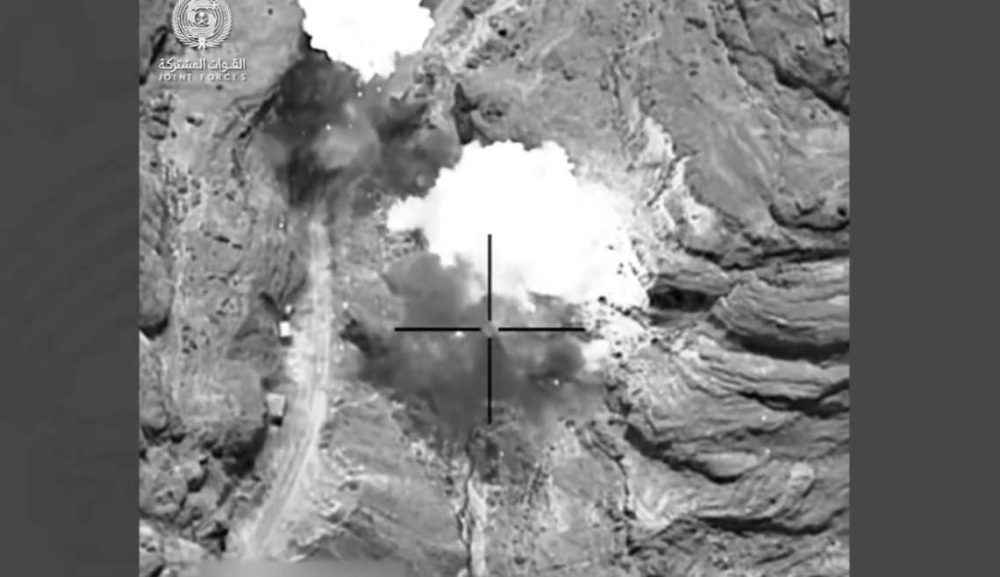
Pakistan’s expanding military role in Saudi Arabia amid the Yemen conflict could strain its defence resources and fragile finances…reports Asian Lite News Desk Pakistan’s military involvement in the war in Yemen may prove unsustainable because of mounting financial pressures and competing security demands, according to a new report. Islamabad’s growing military presence in Saudi Arabia risks stretching its defence resources while exposing the country to greater strategic and economic challenges. An article by Andrew Wilson in One World Outlook describes Pakistan’s involvement as a case of “fiscal and strategic overreach”, arguing that the country lacks the financial flexibility to sustain an expanded military commitment. Pakistan’s external finances depend heavily on an International Monetary Fund (IMF) programme, financial support from Gulf countries and remittances from Pakistani workers in the region. The report argues that deeper military involvement in the conflict could place additional pressure on these sources of financial stability. It also warns that deploying troops and military equipment abroad could weaken Pakistan’s capacity to address security challenges along its eastern border and deal with two domestic insurgencies. The move could also draw Islamabad into a conflict it has sought to approach cautiously. A Reuters report in May, citing Pakistani security and government sources, said Islamabad had deployed around 8,000 troops, a squadron of approximately 16 aircraft, mostly JF-17 fighter jets, two drone squadrons and a Chinese HQ-9 air-defence battery to Saudi Arabia. According to those sources, Riyadh was financing the deployment, with Pakistani personnel operating the equipment. The sources also said a confidential agreement contemplated the possibility of deploying up to 80,000 troops. Islamabad has not confirmed those figures, although it has acknowledged its military presence in Saudi Arabia, including the deployment of fighter jets at King Abdulaziz Air Base from April. The One World Outlook article argues that Saudi financial support can cover allowances and operating expenses but cannot easily replace military equipment needed elsewhere or resolve the political and strategic challenges of participating in the Yemen conflict. Pakistan’s defence budget is another concern. For the 2026-27 financial year, the federal government allocated PKR 3 trillion, or approximately $10.8 billion, to defence services. The allocation represents an 18 per cent increase from the original PKR 2.55 trillion provision and amounts to around 2.1 per cent of projected gross domestic product (GDP). Defence spending accounts for approximately 16 per cent of the federal government’s PKR 18.8 trillion expenditure. Military pensions are budgeted separately at PKR 822 billion, while debt servicing costs stand at approximately PKR 8 trillion, more than two-and-a-half times the defence allocation. The report argues that these competing financial obligations leave little room for additional military expenditure without placing further pressure on public finances. Pakistan’s reliance on IMF assistance also limits its fiscal flexibility. The country must meet the conditions attached to the programme, including a primary budget surplus target of 2 per cent of GDP and continued restraint on development spending. According to the article, these requirements make it difficult for Islamabad to finance an additional military commitment without compromising other budgetary priorities. Pakistan’s economic indicators offer limited reassurance. Economic growth for the 2025-26 financial year is estimated at between 3.6 and 3.7 per cent, while inflation reached approximately 10.3 per cent in September following an energy price shock. Foreign exchange reserves stood at around $21.5 billion at the end of September. Although this marks an improvement from the low levels recorded in 2023, the report notes that the reserves cover only a few months of imports. Financial assistance from Gulf partners remains central to Pakistan’s external stability. The article says Islamabad holds approximately $8 billion in Saudi deposits at its central bank. In July, the State Bank of Pakistan said Riyadh had extended the maturity of $5 billion in deposits to December 2028, easing the country’s immediate external financing requirements. A further $3 billion deposit was also extended in the spring. However, the article argues that these arrangements provide temporary relief rather than long-term financial independence, particularly as regional conflict threatens the stability of the Gulf economies on which Pakistan relies. The report concludes that Pakistan faces a difficult balance between supporting Saudi Arabia militarily and preserving the financial and military resources needed to address its domestic and regional challenges.
Go toTop

Don't Miss

Gadkari: 70% work on India-Myanmar-Thailand highway complete

The highway will span from Moreh in Manipur, India to

Govt eMarketplace Achieves Milestone

GeM, a pioneer in public procurement, was conceptualised by PM