Pakistan and Kazakhstan elevate ties with a strategic partnership, signing 37 agreements and setting an ambitious target to quadruple bilateral trade to USD 1 billion within a year
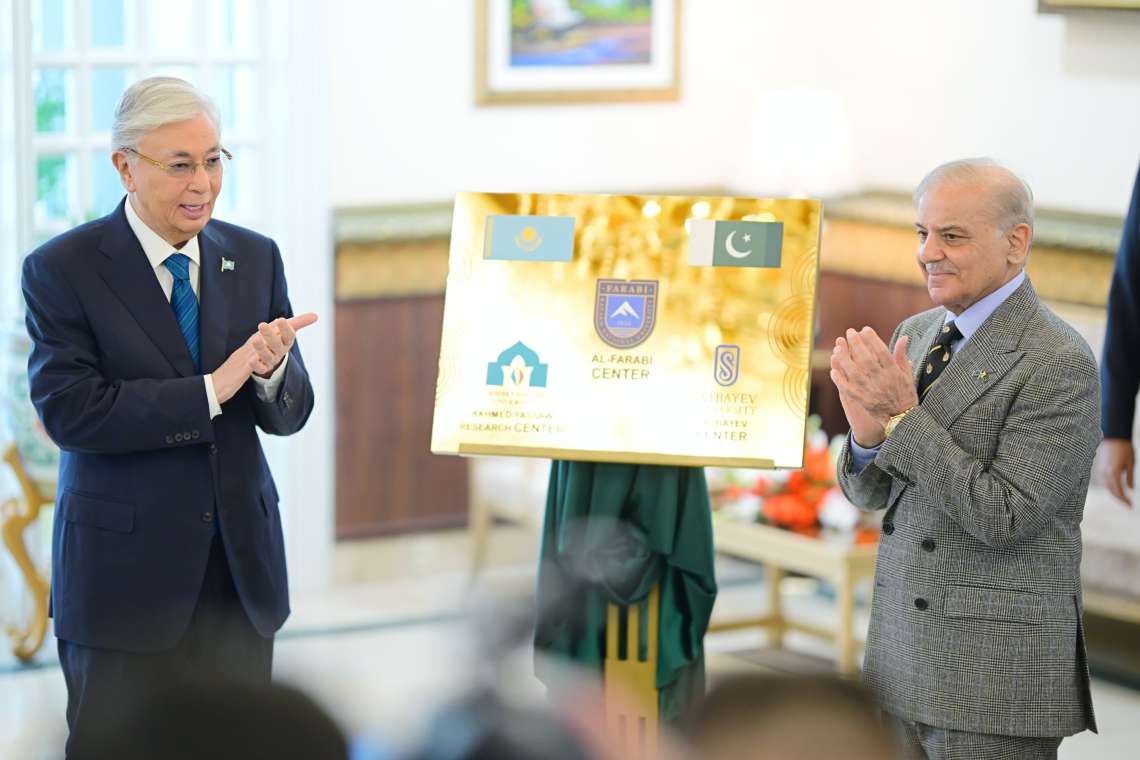
Pakistan and Kazakhstan have taken a significant step towards deepening their economic and strategic relationship, setting an ambitious target of increasing bilateral trade to USD 1 billion within the next year. The commitment was underlined during Kazakhstan President Kassym-Jomart Tokayev’s two-day official visit to Pakistan, the first by a Kazakh head of state in 23 years.
The centrepiece of the visit was the signing of a joint declaration establishing a strategic partnership between the two countries, alongside 37 memorandums of understanding and agreements covering a wide range of sectors. The accords were signed following talks between Prime Minister Shehbaz Sharif and President Tokayev, reflecting a shared intent to broaden cooperation beyond traditional diplomatic ties into economic, technological and people-to-people domains.
The agreements span petroleum, mining and geo-sciences, maritime affairs, customs cooperation, railways, agriculture, artificial intelligence and digital development, as well as health, education, science and technology. Officials on both sides described the scale and diversity of the agreements as indicative of a maturing bilateral relationship aimed at long-term engagement rather than symbolic diplomacy.
Addressing a joint press stakeout, Prime Minister Sharif characterised the signing of the strategic partnership declaration as a historic moment in Pakistan-Kazakhstan relations. He said Pakistan regarded Kazakhstan as a strategic and highly valued partner in Central Asia and noted that discussions held during the day had been substantive and productive. The prime minister expressed hope that the signed memorandums would swiftly move from paper to implementation, emphasising the importance of translating political intent into tangible outcomes.
Sharif also highlighted the current volume of bilateral trade, estimated at around USD 250 million, and said both sides had agreed to quadruple that figure within a year. He called on business communities in both countries to play a central role in achieving the target, particularly through joint ventures and cross-border investment in priority sectors.
As part of the expanding cooperation framework, the two countries also signed a treaty on extradition and a transit trade agreement, steps seen as crucial for facilitating smoother trade flows and strengthening legal and institutional collaboration. Improved connectivity, particularly in transport and logistics, featured prominently in discussions, reflecting Pakistan’s interest in positioning itself as a trade corridor linking Central Asia with South Asia and beyond.
President Tokayev, in his remarks, said he had held wide-ranging talks with Prime Minister Sharif covering trade, industry, energy, information technology, transport and logistics, as well as cultural and humanitarian cooperation. He described the joint declaration on strategic partnership as a historical document, noting that elevating bilateral relations to a new level would open up vast opportunities across both bilateral and multilateral agendas.
The Kazakh president reaffirmed his country’s commitment to raising trade volumes to USD 1 billion and said more than 250 companies from both nations were expected to participate in the Kazakhstan-Pakistan Business Forum being held alongside the visit. He said the forum would see the signing of several commercial agreements, signalling a stronger role for the private sector in driving economic ties.
Beyond economic cooperation, the visit also carried diplomatic and symbolic weight. Prime Minister Sharif congratulated President Tokayev on joining US President Donald Trump’s Board of Peace, while Pakistan announced it would confer the Nishan-i-Pakistan, the country’s highest civilian award, on the Kazakh leader in recognition of his efforts to strengthen bilateral relations.
Separately, Deputy Prime Minister and Foreign Minister Ishaq Dar met President Tokayev to welcome him to Pakistan, while Commerce Minister Jam Kamal Khan held detailed talks with Kazakhstan’s Minister of Trade and Integration Arman Shaqqaliev, focusing on market access, trade facilitation and sector-specific collaboration.
The visit underscores Pakistan’s broader push to strengthen ties with Central Asian states, leveraging geography, connectivity and shared economic interests. For Kazakhstan, the engagement reflects a growing interest in diversifying partnerships in South Asia, with both sides now betting that ambitious targets and expanded institutional frameworks can translate into measurable economic gains.