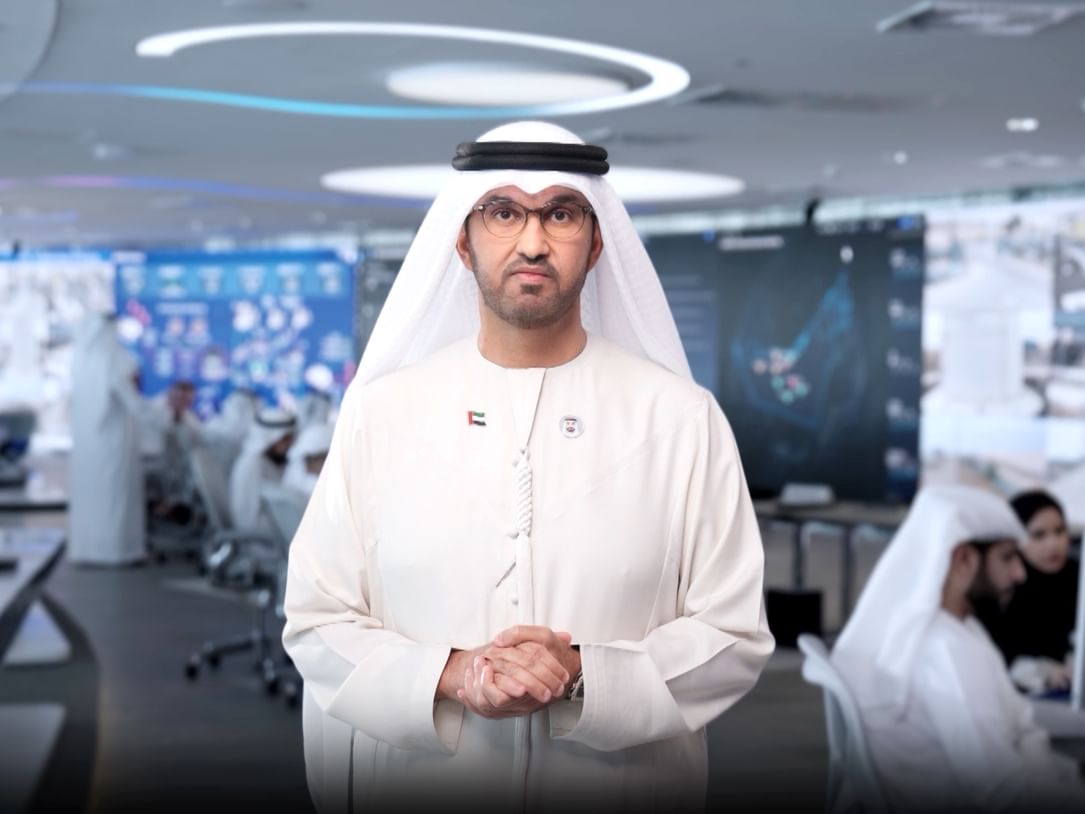
UAE energy chief Al Jaber calls weaponising the Strait of Hormuz “economic terrorism,” urging global cooperation, investment in resilience, and stability to protect energy security worldwide, reports Asian Lite Newsdesk
Dr. Sultan bin Ahmed Al Jaber, the United Arab Emirates’ Minister of Industry and Advanced Technology and CEO of ADNOC, has warned that using the Strait of Hormuz as a geopolitical lever constitutes “economic terrorism” with consequences far beyond energy markets.
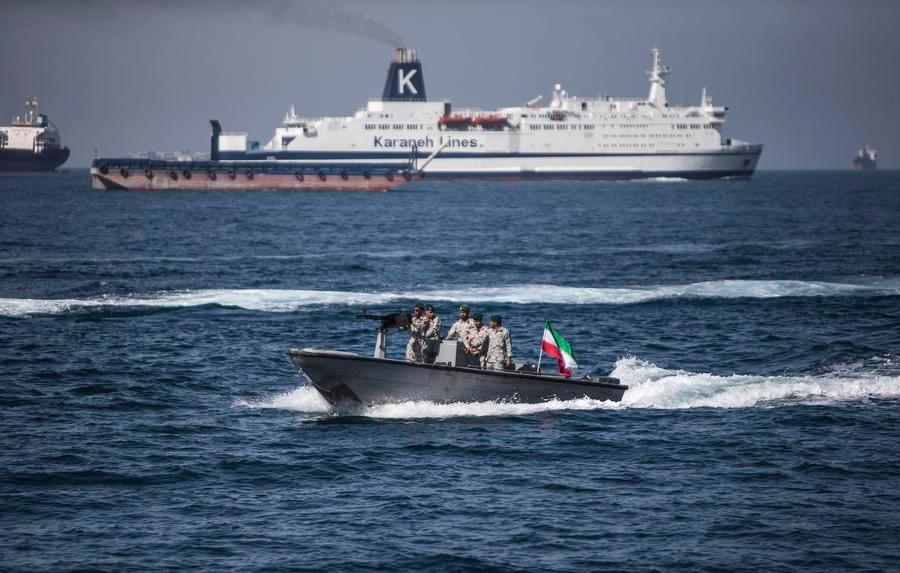
Speaking at the CERAWeek conference in Houston, Texas, Dr. Al Jaber said that threats to the 21-mile-wide waterway, through which nearly a fifth of the world’s oil and gas flows, have immediate and severe global repercussions. The strait also carries over a third of the world’s fertiliser, almost a quarter of petrochemicals, and substantial industrial metals, making it a critical artery of the global economy.
“Energy security is not just a slogan, it’s the difference between lights on and lights off,” Dr. Al Jaber said. “When Hormuz is squeezed, the pressure is felt everywhere. In just three weeks, oil prices rose by 50 per cent, driving up living costs for those who can least afford it and slowing economic growth worldwide. Factories, farms, families—everyone bears the cost.”
He insisted that any attempt to hold the strait hostage is an attack not on a single nation but on the global economy. “Weaponising the Strait of Hormuz is economic terrorism against every nation. No country should be allowed to hold Hormuz hostage, not now, not ever,” he said, stressing that the solution is security, not market intervention.
Dr. Al Jaber also defended the UAE’s preparedness and resilience. “We did not seek conflict and took every step to prevent it. But when it came, our defences and character were tested, and we withstood it. At ADNOC, we took hits no civilian enterprise should endure, yet extraordinary measures ensured our people were safe, and stakeholders received what they needed.”
He described the UAE’s approach as rooted in long-term planning, investment in infrastructure, and global partnerships. “Partnership is not something we do—it is who we are. Our commitments are concrete, our word is our currency. When it matters, we step up. That’s why our relationship with partners, including the United States, endures.”
Dr. Al Jaber noted that ADNOC, XRG, and Masdar have collectively invested over $85 billion in U.S. energy assets, spanning power generation, advanced chemicals, and jobs in 19 states. He emphasised plans to expand investments across the energy value chain, from storage and liquefaction to regasification plants, underlining the UAE’s commitment to stable, diversified energy supply.
Looking ahead, he drew a stark contrast between competing visions for the region: one focused on instability, the other on prosperity. “We built ADNOC into one of the world’s most reliable energy companies not because disruption never reaches our borders, but because we stay the course. We diversify production, expand routes to markets, integrate energy sources at scale, and embed technology and AI as force multipliers for the next era of energy.”
Dr. Al Jaber concluded by extending an invitation to global energy leaders to attend ADIPEC in Abu Dhabi this November. “The events of recent weeks have drawn a clear line in the sand. Choose to be architects of stability, not spectators of volatility. Join us for a working session on the resilience of the global energy system.”
CERAWeek, taking place from 23-27 March, convenes top global energy thought leaders, while ADIPEC will run from 2-5 November 2026 at the ADNEC Centre, Abu Dhabi.