June 14, 2021
5 mins read

Promises on Climate, Covid, Nature Fall Short in G7

Challenged to meet 2010 promises on climate finance, ensure the developing world is fully vaccinated by 2022 and restructure the debt hold facing African, Asian and Latin nations — they fell well short, areport by VISHAL GULATI

The recently-concluded G7 summit has been a massive letdown on a historic opportunity to tackle the triple crises of climate, COVID and collapse of nature, experts across the globe said on Monday.

If the leaders cannot get their act together by the October G20, the UN climate conference, COP26, slated in November in Glasgow is doomed to fail — that’s the take of leading analysts as the 2021 Cornwall summit wrapped up on Sunday.

Challenged to meet 2010 promises on climate finance, ensure the developing world is fully vaccinated by 2022 and restructure the debt hold facing African, Asian and Latin nations — they fell well short.
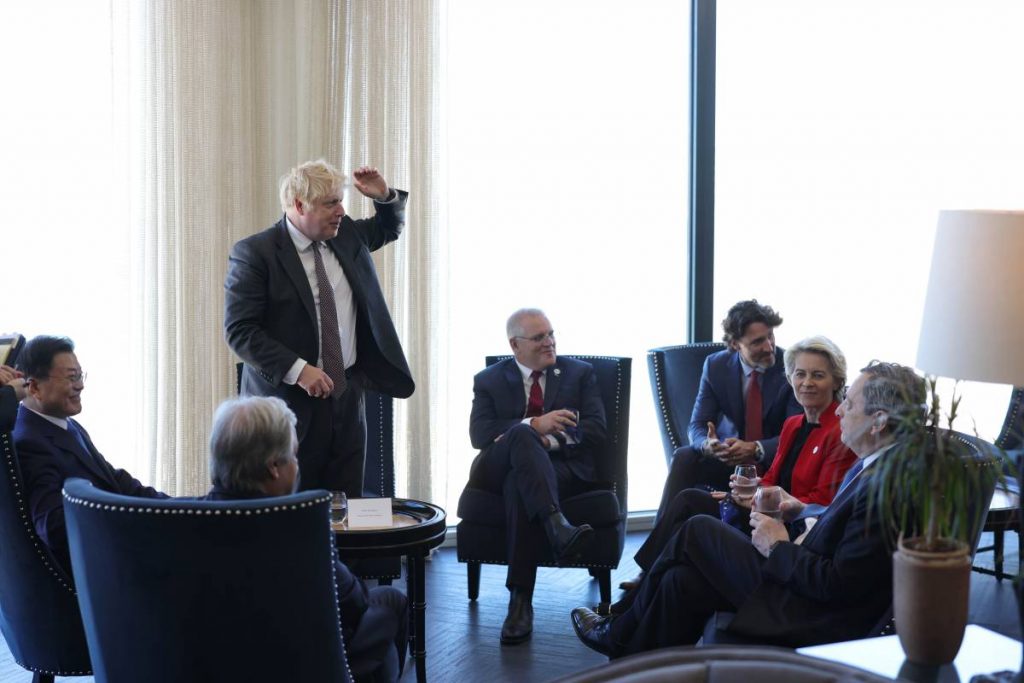
G7 Summit in Carbis Bay, Cornwall. Picture by Andrew Parsons No 10 Downing Street

The September UN General Assembly is now set as the key date for G7 leaders to deliver ahead of COP26.

Responding to the G7 communique, Christian Aid’s Patrick Watt’s, Director of Policy, Public Affairs and Campaigns, told IANS: “This summit was an opportunity for the richest nations of the world to tackle the perfect storm of the pandemic, the climate emergency, and the debt crisis that is hitting the world’s poorest people hardest.

“We’ve heard warm words about a green Marshall Plan and ambitions to vaccinate the world, but this falls well short of what’s needed. This is a partial plan not a Marshall Plan. The US committed 6.5 per cent of its post-war GDP to the Marshall Plan. The UK, in contrast, has reneged on an aid promise one tenth as ambitious. The G7 needed to progress comprehensive debt relief, deliver on climate finance promises, and act to end vaccine apartheid.

“The G7 leadership has failed to make real progress in any of these areas. The success of the COP26 climate summit now hangs in the balance. There is still time for rich nations to deliver a solidarity package that tackles these interconnected crises. Without it, the COP will fail.”
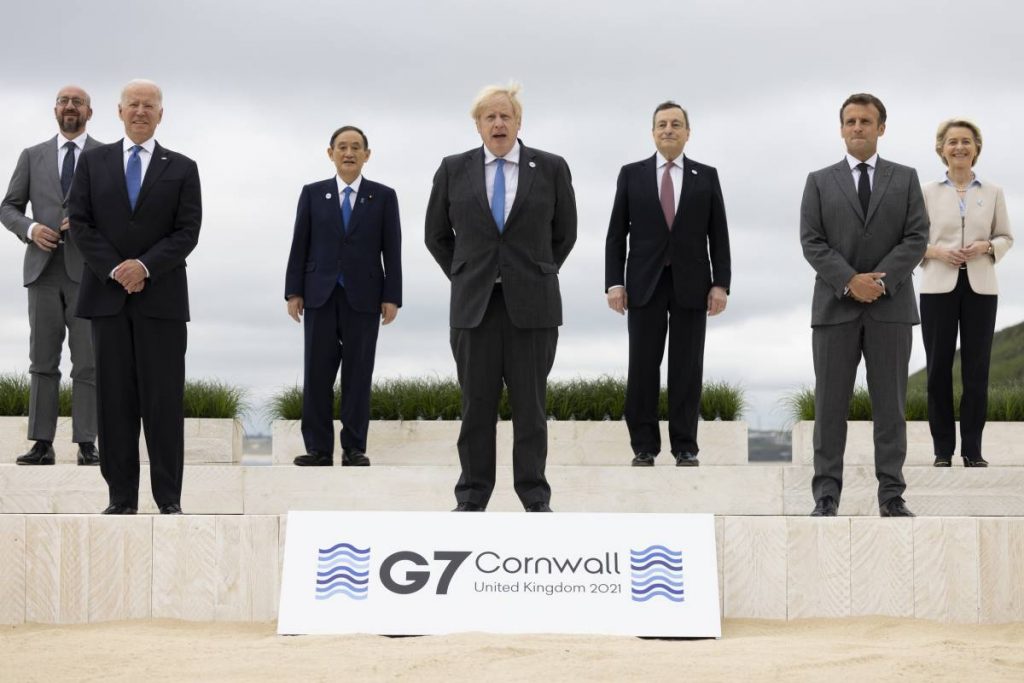
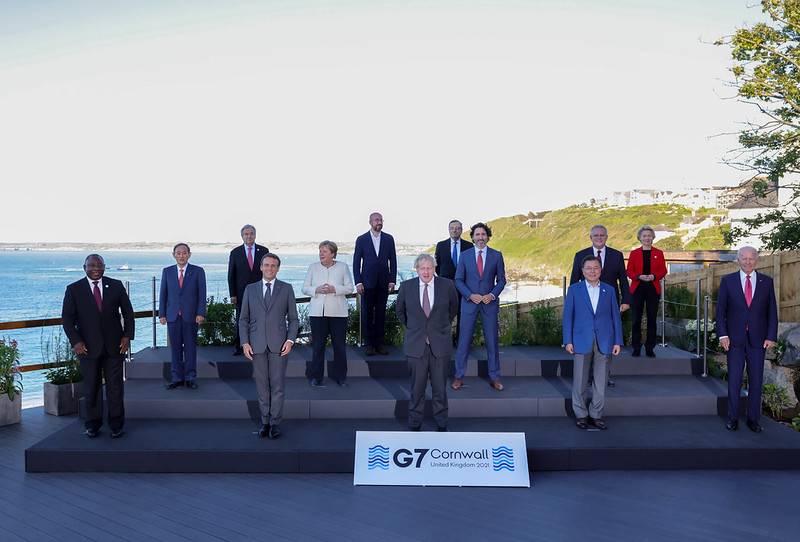
A family photograph of G7 Leaders during the summit in Carbis Bay. Picture by Simon Dawson No 10 Downing Street

Jennifer Morgan, Executive Director of Greenpeace, said: “Everyone is being hit by Covid-19 and worsening climate impacts, but it is the most vulnerable who are fairing the worst due to G7 leaders sleeping on the job.

“We need authentic leadership and that means treating the pandemic and the climate crisis for what they are: an inter-connected inequality emergency. The G7 have failed to set us up for a successful COP26 as trust is sorely lacking between rich and developing countries.”

ALSO READ: G7 agrees to co-operate on cybercrime cases

Echoing similar sentiments, Rachel Kyte, Dean of Fletcher School at Tufts University, and former UN climate envoy, said: “We need a detailed plan for making the $100 billion a reality by the UN General Assembly. It’s a big year for climate diplomacy and the G7 members will have to hit high notes at the G20 finance meeting in July before arriving in Glasgow in November.”

Ahead of the G7, YouGov polling for climate think tank E3G showed overwhelming public support across Canada, France, Germany, Japan, Italy, the UK and the US for helping poorer countries cut their dependence on fossil fuels.
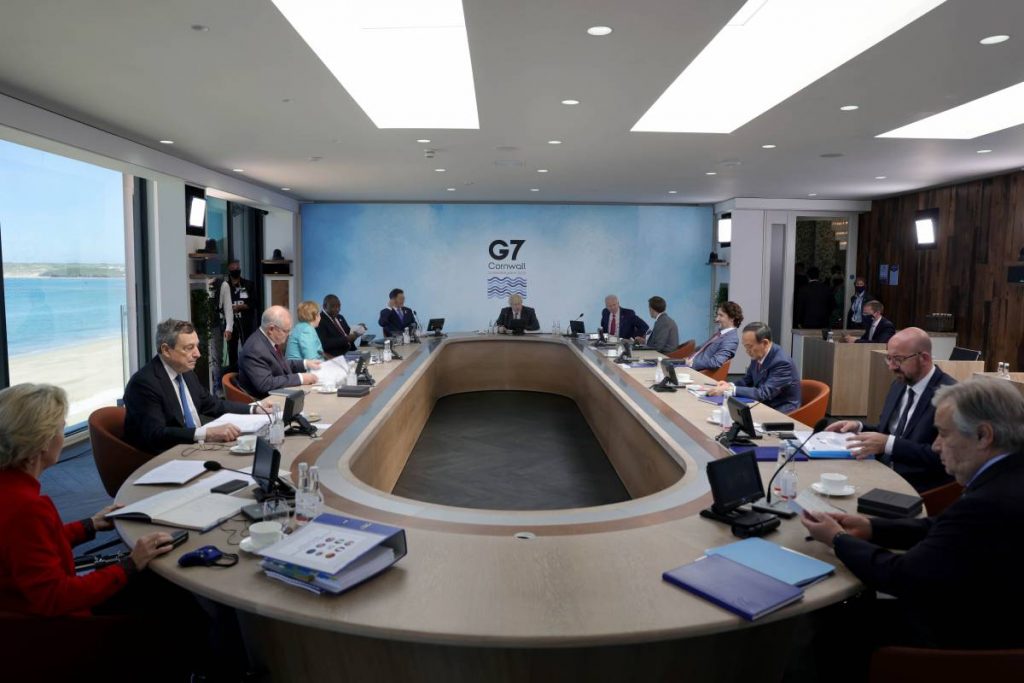
Prime Minister Boris Johnson chairs the G7 Summit in Carbis Bay, Cornwall. Picture by Andrew Parsons No 10 Downing Street

Taken as one, 66 per cent of voters in G7 countries support this, with clear majorities of support in all seven countries.

The public in all seven countries wanted their government to stick to promises made at the UN in 2010 to deliver $100 billion of climate finance a year.

“Fifty per cent of G7 voters want their government to stick to their pledge, while just 29 per cent think circumstances have changed sufficiently that their government should go back on their pledge,” said the poll.

The good news from Cornwall is that tackling climate change was inextricably woven through every agenda item.
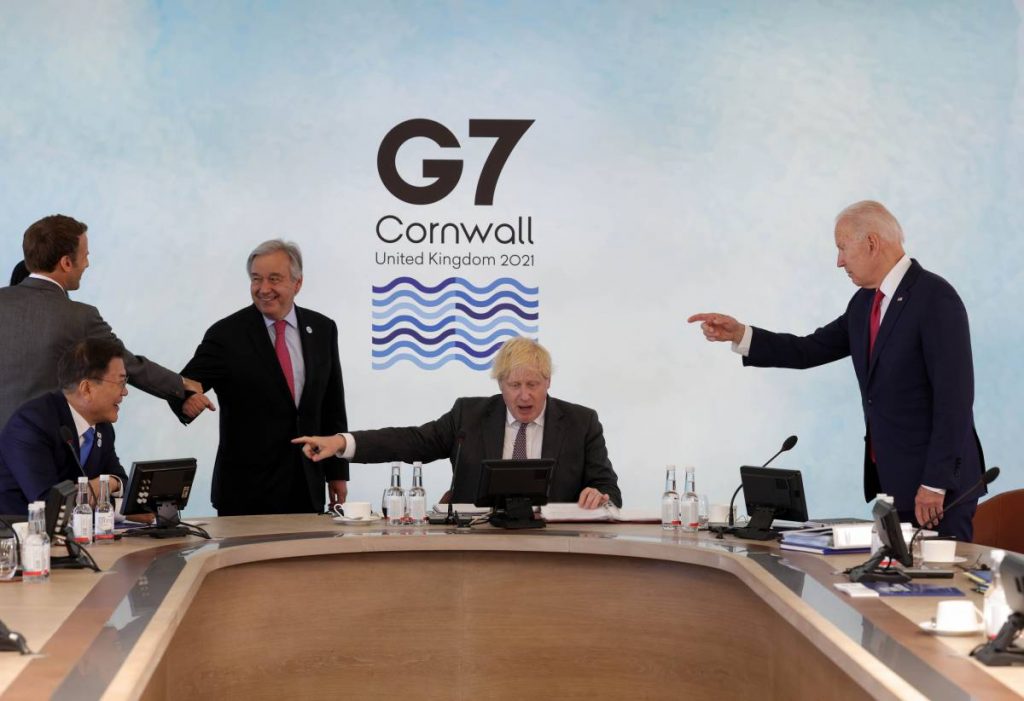
UK Prime Minister Boris Johnson at the G7 Summit in Carbis Bay, Cornwall. Picture by Andrew Parsons No 10 Downing Street

Each G7 country did commit to increase and improve climate finance through to 2025, but only a few offered clear new pledges. Canada was also among those countries to hike climate finance contributions, while others said they will review pledges pre-COP26.

The leaders did agree to end the public financing of coal by 2021, with Canada, Germany, the UK, and the US agreeing to back a $2 billion coal transition fund. The deal leaves China isolated as the world’s biggest public backer of the world’s dirtiest fossil fuel.
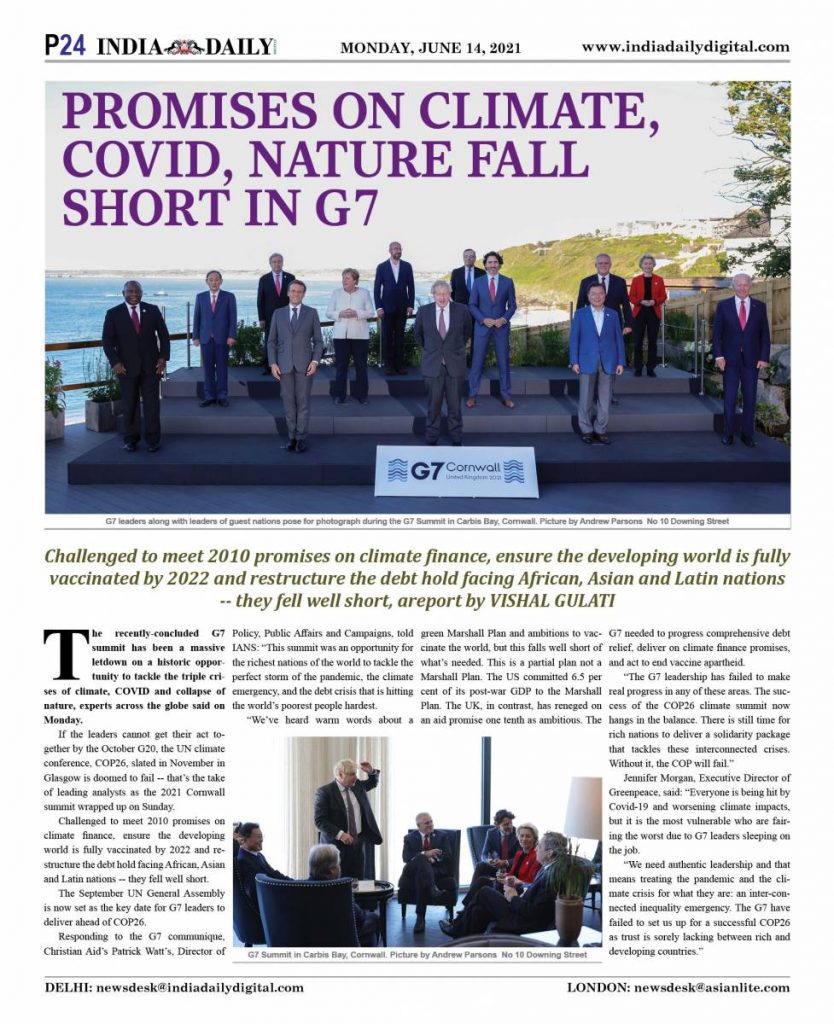
G7 leaders offered a vision of a green alternative to China’s Belt and Road, but the G7 ‘Marshall Plan’ or ‘Build Back Better World’ initiative urgently needs details, which should be delivered by the UN General Assembly.

Bernice Lee, Hoffmann Distinguished Fellow for sustainability and Research Director Futures at Chatham House, said: “It’s good to see G7 turning their back on coal, but words are not enough. They now need to get serious about a global clean partnership that delivers for developing nations.”

The mixed outcome places huge pressure on the shoulders of Italy Prime Minister Mario Draghi, who will steer G20 talks that commence in July, with a finance meeting in Venice now set as a critical moment ahead of COP26.

ALSO READ: ‘India’s engagement with G7 stands on its own’

Previous Story

Authorities launch probe over Covid outbreak in Guangzhou

Next Story

World Bank nod to $60mn fund for Nepal’s higher education

Previous Story

Authorities launch probe over Covid outbreak in Guangzhou

Next Story

World Bank nod to $60mn fund for Nepal’s higher education

Latest from -Top News

Pakistan Risks Overstretching Itself in Yemen War

Pakistan’s expanding military role in Saudi Arabia amid the Yemen conflict could strain its defence resources and fragile finances…reports Asian Lite News Desk Pakistan’s military involvement in the war in Yemen may prove unsustainable because of mounting financial pressures and competing security demands, according to a new report. Islamabad’s growing military presence in Saudi Arabia risks stretching its defence resources while exposing the country to greater strategic and economic challenges. An article by Andrew Wilson in One World Outlook describes Pakistan’s involvement as a case of “fiscal and strategic overreach”, arguing that the country lacks the financial flexibility to sustain an expanded military commitment. Pakistan’s external finances depend heavily on an International Monetary Fund (IMF) programme, financial support from Gulf countries and remittances from Pakistani workers in the region. The report argues that deeper military involvement in the conflict could place additional pressure on these sources of financial stability. It also warns that deploying troops and military equipment abroad could weaken Pakistan’s capacity to address security challenges along its eastern border and deal with two domestic insurgencies. The move could also draw Islamabad into a conflict it has sought to approach cautiously. A Reuters report in May, citing Pakistani security and government sources, said Islamabad had deployed around 8,000 troops, a squadron of approximately 16 aircraft, mostly JF-17 fighter jets, two drone squadrons and a Chinese HQ-9 air-defence battery to Saudi Arabia. According to those sources, Riyadh was financing the deployment, with Pakistani personnel operating the equipment. The sources also said a confidential agreement contemplated the possibility of deploying up to 80,000 troops. Islamabad has not confirmed those figures, although it has acknowledged its military presence in Saudi Arabia, including the deployment of fighter jets at King Abdulaziz Air Base from April. The One World Outlook article argues that Saudi financial support can cover allowances and operating expenses but cannot easily replace military equipment needed elsewhere or resolve the political and strategic challenges of participating in the Yemen conflict. Pakistan’s defence budget is another concern. For the 2026-27 financial year, the federal government allocated PKR 3 trillion, or approximately $10.8 billion, to defence services. The allocation represents an 18 per cent increase from the original PKR 2.55 trillion provision and amounts to around 2.1 per cent of projected gross domestic product (GDP). Defence spending accounts for approximately 16 per cent of the federal government’s PKR 18.8 trillion expenditure. Military pensions are budgeted separately at PKR 822 billion, while debt servicing costs stand at approximately PKR 8 trillion, more than two-and-a-half times the defence allocation. The report argues that these competing financial obligations leave little room for additional military expenditure without placing further pressure on public finances. Pakistan’s reliance on IMF assistance also limits its fiscal flexibility. The country must meet the conditions attached to the programme, including a primary budget surplus target of 2 per cent of GDP and continued restraint on development spending. According to the article, these requirements make it difficult for Islamabad to finance an additional military commitment without compromising other budgetary priorities. Pakistan’s economic indicators offer limited reassurance. Economic growth for the 2025-26 financial year is estimated at between 3.6 and 3.7 per cent, while inflation reached approximately 10.3 per cent in September following an energy price shock. Foreign exchange reserves stood at around $21.5 billion at the end of September. Although this marks an improvement from the low levels recorded in 2023, the report notes that the reserves cover only a few months of imports. Financial assistance from Gulf partners remains central to Pakistan’s external stability. The article says Islamabad holds approximately $8 billion in Saudi deposits at its central bank. In July, the State Bank of Pakistan said Riyadh had extended the maturity of $5 billion in deposits to December 2028, easing the country’s immediate external financing requirements. A further $3 billion deposit was also extended in the spring. However, the article argues that these arrangements provide temporary relief rather than long-term financial independence, particularly as regional conflict threatens the stability of the Gulf economies on which Pakistan relies. The report concludes that Pakistan faces a difficult balance between supporting Saudi Arabia militarily and preserving the financial and military resources needed to address its domestic and regional challenges.
Go toTop

Don't Miss

UAE, US commit to jointly tackle climate challenge

UAE and US have announced cooperation to make investments in

Over 50% people in 30s given at least one vaccine dose: NHS

According to NHS England, 600,000 people have been asked to