April 9, 2026
2 mins read

India backs Vietnam defence leadership

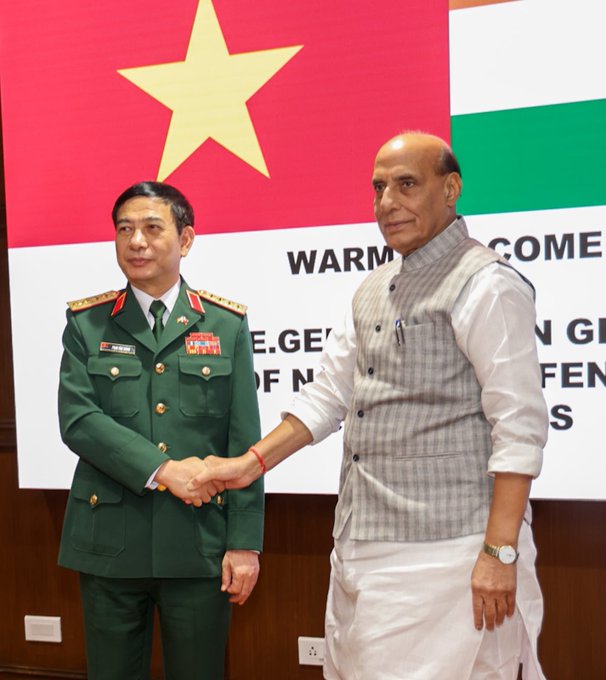
Rajnath Singh congratulates Vietnam’s new Deputy Prime Minister Phan Van Giang, reaffirming commitment to strengthen defence cooperation and strategic partnership between both nations…reports Asian Lite News

Defence Minister Rajnath Singh on Thursday congratulated Phan Van Giang on his appointment as Vietnam’s Deputy Prime Minister and Minister of National Defence, reaffirming India’s commitment to strengthening long-standing defence ties between the two countries.

General Phan Van Giang assumed his new role on April 8, following approval by National Assembly of Vietnam during its first session for the 2026–2031 term. He will serve concurrently as Deputy Prime Minister and Defence Minister in the new government led by Prime Minister Le Minh Hung, and is among six deputy prime ministers appointed for the term.

Taking to X, Singh extended his “warm congratulations” to Giang and expressed optimism about the future of bilateral defence engagement. He highlighted India’s intent to expand cooperation in key areas such as security, military exchanges, and defence industry collaboration under Giang’s leadership.

Singh also voiced confidence that the India-Vietnam partnership would continue to grow steadily, reflecting the strong foundation built over decades of diplomatic and strategic engagement between the two nations.

Earlier in the week, Prime Minister Narendra Modi congratulated To Lam on his election as Vietnam’s President for the 2026–2031 tenure. Modi emphasised India’s readiness to work closely with Vietnam to further deepen the Comprehensive Strategic Partnership and advance shared regional and global interests.

In his message, Modi described the relationship as a “time-tested friendship” and expressed confidence that bilateral ties would continue to strengthen under To Lam’s leadership. He also reiterated India’s commitment to promoting peace, prosperity, and stability in the region through closer cooperation with Vietnam.

The announcement followed the confirmation of To Lam as President by Vietnam’s National Assembly on April 7, after his nomination by the Communist Party of Vietnam Central Committee.

India and Vietnam share close and warm bilateral relations, which were elevated to a Comprehensive Strategic Partnership during Modi’s visit to Vietnam in 2016. Since then, both countries have expanded cooperation across a wide range of sectors, including defence, trade, energy, and capacity building.

The partnership is guided by the “Joint Vision for Peace, Prosperity and People,” adopted during a virtual summit between Modi and former Vietnamese Prime Minister Nguyen Xuan Phuc in December 2020. This framework continues to shape bilateral engagement and strategic alignment.

In 2022, the two nations marked the 50th anniversary of diplomatic relations, underscoring the depth and resilience of their ties. Both sides have since remained actively engaged in further strengthening multi-dimensional cooperation, with defence collaboration emerging as a key pillar.

The latest exchange of greetings and assurances signals continued momentum in India-Vietnam relations, particularly in the defence sector, as both countries look to enhance strategic coordination and regional stability.
Previous Story

India-Bangladesh Ties Back on Track as FMs Meet

Next Story

War of Words Erupts as Pakistan Minister Criticises Israel

Previous Story

India-Bangladesh Ties Back on Track as FMs Meet

Next Story

War of Words Erupts as Pakistan Minister Criticises Israel

Latest from Asia News

Pakistan Risks Overstretching Itself in Yemen War

Pakistan’s expanding military role in Saudi Arabia amid the Yemen conflict could strain its defence resources and fragile finances…reports Asian Lite News Desk Pakistan’s military involvement in the war in Yemen may prove unsustainable because of mounting financial pressures and competing security demands, according to a new report. Islamabad’s growing military presence in Saudi Arabia risks stretching its defence resources while exposing the country to greater strategic and economic challenges. An article by Andrew Wilson in One World Outlook describes Pakistan’s involvement as a case of “fiscal and strategic overreach”, arguing that the country lacks the financial flexibility to sustain an expanded military commitment. Pakistan’s external finances depend heavily on an International Monetary Fund (IMF) programme, financial support from Gulf countries and remittances from Pakistani workers in the region. The report argues that deeper military involvement in the conflict could place additional pressure on these sources of financial stability. It also warns that deploying troops and military equipment abroad could weaken Pakistan’s capacity to address security challenges along its eastern border and deal with two domestic insurgencies. The move could also draw Islamabad into a conflict it has sought to approach cautiously. A Reuters report in May, citing Pakistani security and government sources, said Islamabad had deployed around 8,000 troops, a squadron of approximately 16 aircraft, mostly JF-17 fighter jets, two drone squadrons and a Chinese HQ-9 air-defence battery to Saudi Arabia. According to those sources, Riyadh was financing the deployment, with Pakistani personnel operating the equipment. The sources also said a confidential agreement contemplated the possibility of deploying up to 80,000 troops. Islamabad has not confirmed those figures, although it has acknowledged its military presence in Saudi Arabia, including the deployment of fighter jets at King Abdulaziz Air Base from April. The One World Outlook article argues that Saudi financial support can cover allowances and operating expenses but cannot easily replace military equipment needed elsewhere or resolve the political and strategic challenges of participating in the Yemen conflict. Pakistan’s defence budget is another concern. For the 2026-27 financial year, the federal government allocated PKR 3 trillion, or approximately $10.8 billion, to defence services. The allocation represents an 18 per cent increase from the original PKR 2.55 trillion provision and amounts to around 2.1 per cent of projected gross domestic product (GDP). Defence spending accounts for approximately 16 per cent of the federal government’s PKR 18.8 trillion expenditure. Military pensions are budgeted separately at PKR 822 billion, while debt servicing costs stand at approximately PKR 8 trillion, more than two-and-a-half times the defence allocation. The report argues that these competing financial obligations leave little room for additional military expenditure without placing further pressure on public finances. Pakistan’s reliance on IMF assistance also limits its fiscal flexibility. The country must meet the conditions attached to the programme, including a primary budget surplus target of 2 per cent of GDP and continued restraint on development spending. According to the article, these requirements make it difficult for Islamabad to finance an additional military commitment without compromising other budgetary priorities. Pakistan’s economic indicators offer limited reassurance. Economic growth for the 2025-26 financial year is estimated at between 3.6 and 3.7 per cent, while inflation reached approximately 10.3 per cent in September following an energy price shock. Foreign exchange reserves stood at around $21.5 billion at the end of September. Although this marks an improvement from the low levels recorded in 2023, the report notes that the reserves cover only a few months of imports. Financial assistance from Gulf partners remains central to Pakistan’s external stability. The article says Islamabad holds approximately $8 billion in Saudi deposits at its central bank. In July, the State Bank of Pakistan said Riyadh had extended the maturity of $5 billion in deposits to December 2028, easing the country’s immediate external financing requirements. A further $3 billion deposit was also extended in the spring. However, the article argues that these arrangements provide temporary relief rather than long-term financial independence, particularly as regional conflict threatens the stability of the Gulf economies on which Pakistan relies. The report concludes that Pakistan faces a difficult balance between supporting Saudi Arabia militarily and preserving the financial and military resources needed to address its domestic and regional challenges.

Economic tide is turning in Bangladesh

If there is one thing that can bring some comfort to the struggling Bangladeshi economy, it is good relations with India. Bangladesh should remember that Delhi’s backing, through easy supplies of essentials

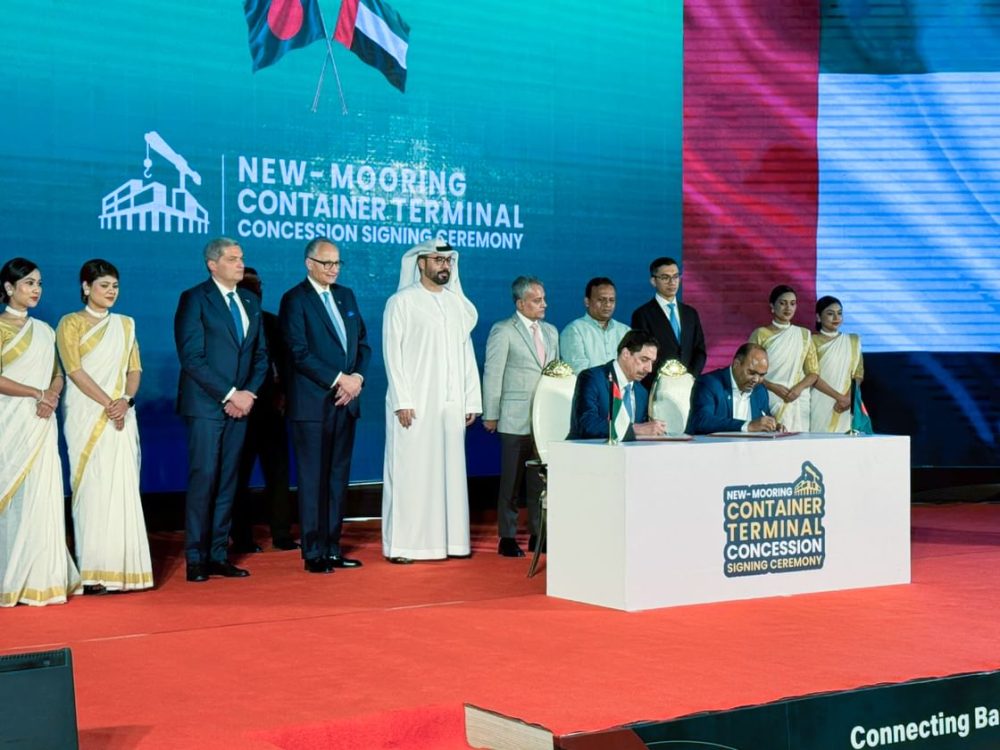
DP World Lands 15-Year Bangladesh Port Deal

The agreement between the Chittagong Port Authority (CPA) and DP World covers the New Mooring Container Terminal…reports Asian Lite News Desk Bangladesh has signed a 15-year concession agreement with global ports operator

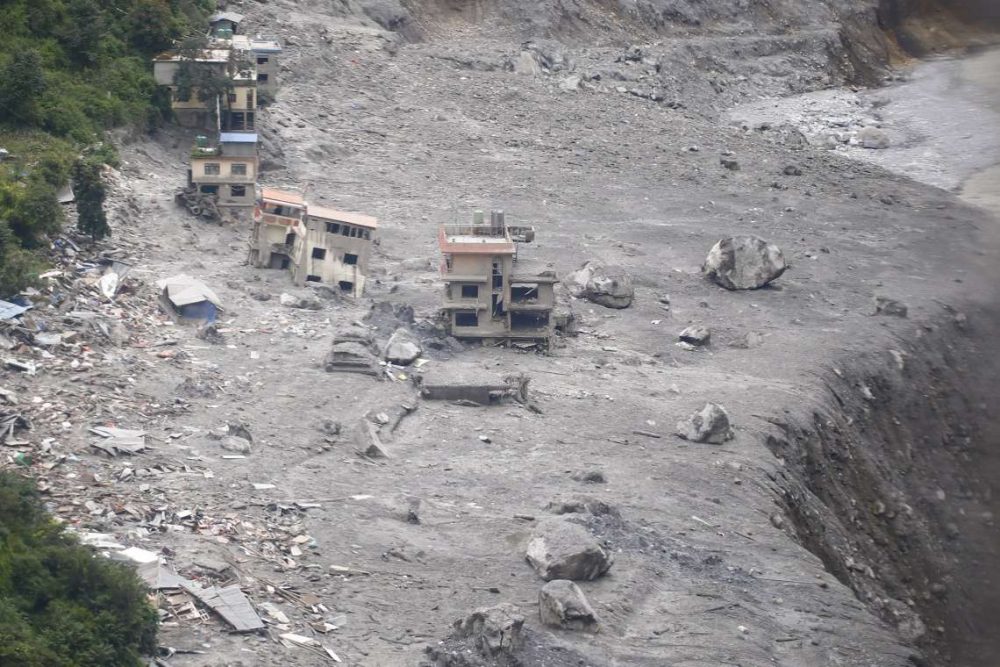
Nepal Floods Cause $1.66 Billion In Damage, Says World Bank

Nepal’s August 2026 floods caused an estimated US$1.66 billion in direct physical damage, with infrastructure accounting for 83 per cent of the total…reports Asian Lite News Desk Nepal’s devastating floods in August 2026 caused an estimated US$1.66 billion in direct physical damage, with infrastructure accounting for 83 per cent of the total, according to a World Bank report. The estimate, included in the World Bank’s Nepal Development Update unveiled this week, is close to the Nepal government’s preliminary Rapid Damage and Needs Assessment (RDNA), which put physical damage at US$1.81 billion. The government’s assessment also estimated losses beyond physical assets at US$883.32 million, taking the total economic effects of the disaster to approximately US$2.7 billion. The World Bank’s Global Rapid Post-Disaster Damage Estimation (GRADE) found that infrastructure suffered the greatest damage, estimated at US$1.38 billion, or 83 per cent of the total. Residential buildings accounted for US$185 million, or 11 per cent, while non-residential buildings sustained damage worth US$101 million, or 6 per cent. The floods along the Bhotekoshi and Trishuli rivers caused extensive damage to hydropower projects, solar energy facilities, electricity transmission infrastructure and transport networks. The energy sector, particularly hydropower, was among the worst affected. The August 2026 floods affected 12 hydropower projects and one solar project, involving 281.1 MW of operational capacity and 395.02 MW of capacity under construction. Damage to transmission lines and substations also disrupted the transmission of 149.6 MW of electricity to the national grid. The total affected capacity reached approximately 430.7 MW, equivalent to 10.6 per cent of Nepal’s installed hydropower and solar capacity at the end of fiscal year 2025-26, which concluded in mid-July. The disaster also severely damaged transport infrastructure along the 82-km Rasuwa trade corridor, which connects Kathmandu with the Rasuwagadhi border point with China. More than 55 km of the corridor was damaged, including 40 km that was completely destroyed. The floods also damaged 37 motorable bridges and 68 suspension bridges. The disaster resulted in significant human losses along the affected corridor and beyond. According to Nepal’s National Disaster Risk Reduction and Management Authority, 1,455 people had been confirmed dead, while 5,285 remained missing following the disaster. The World Bank report found that the physical damage was concentrated in three districts in central Nepal: Rasuwa, Nuwakot and Dhading. Rasuwa was the worst-affected district, accounting for US$1.07 billion, or 64 per cent, of the total direct damage. Nuwakot recorded an estimated US$551 million in damage, while Dhading suffered approximately US$39 million. “The findings highlight the concentration of physical damage in a small number of districts and the disproportionate impact on infrastructure, underscoring the scale of the reconstruction challenge facing the affected areas,” the World Bank said. The global development financier said the floods had demonstrated the scale and complexity of disaster risks in Nepal’s Himalayan environment. The event also showed how a single extreme weather event could trigger cascading impacts across sectors and geographical areas. The report said recovery efforts should extend beyond restoring infrastructure to its pre-disaster condition. While the principle of “Build Back Better” remained relevant, the World Bank stressed that rebuilding infrastructure to higher engineering standards in the same locations might not always be sufficient. “In some cases, simply rebuilding the same infrastructure in the same location to a higher engineering standard may not be sufficient. Nepal may need to build differently — based on a better understanding of risk, more careful decisions about location and design, greater redundancy in critical networks, stronger monitoring and early warning, and a more integrated approach to infrastructure development in the Himalayas,” the report said. The World Bank said Nepal’s recovery strategy should incorporate improved risk assessment, more informed infrastructure planning, stronger monitoring systems and better early warning mechanisms. The report emphasised that reconstruction should not only restore damaged assets but also reduce the impact of future disasters, particularly in the country’s vulnerable Himalayan regions.
Go toTop

Don't Miss

India sends 1000 MT rice to support Namibia’s food security

The El Nino-induced drought has contributed to deteriorating food security

Dhoni signals return to IPL next year

Under Dhoni’s leadership, CSK clinched their fifth record-equalling fifty IPL